
These two terms get used interchangeably all the time, in the news, in policy discussions, even in doctor’s offices. But they don’t mean the same thing, and understanding the difference matters more than most people realize. It changes how we talk about the problem, and more importantly, it changes what we do to fix it.
Starting With the Health Disparities Definition
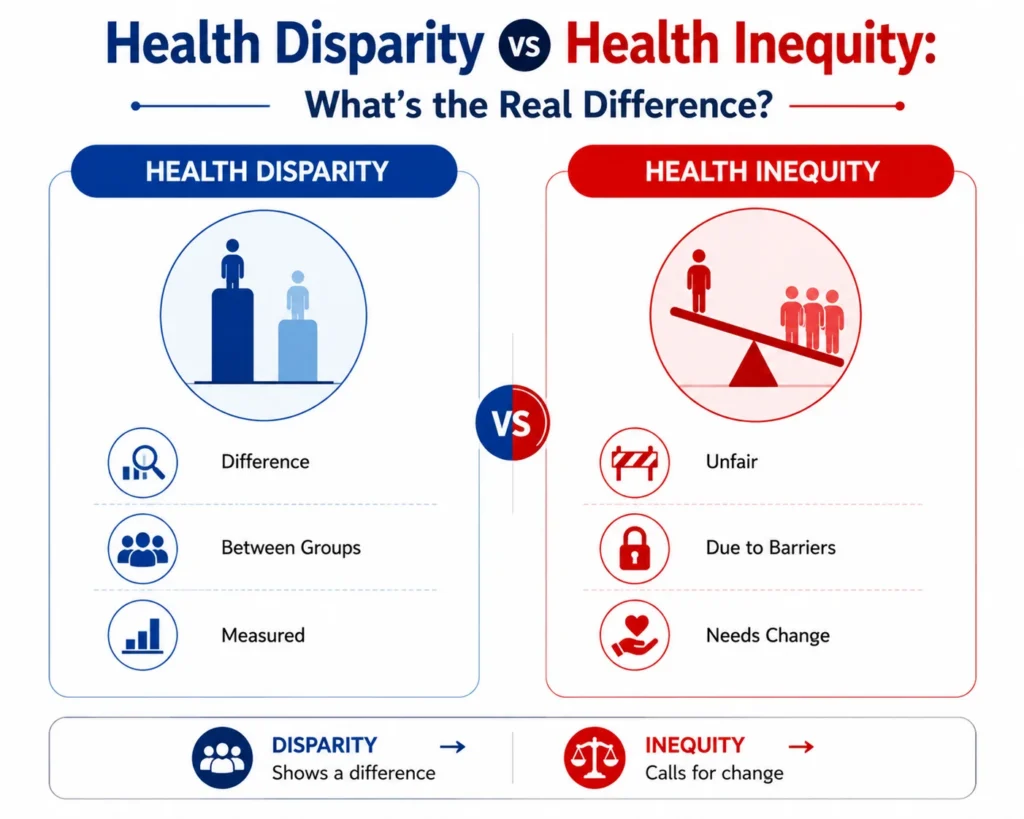
The definition of health disparities is fairly straightforward on the surface. Health disparity is simply a difference in health outcomes between groups of people. One community has higher rates of diabetes than another. One group lives shorter lives on average than another. These are measurable gaps, numbers you can point to on a chart.
What that definition doesn’t tell you is why those gaps exist. Disparity is just an observation. It’s what, not why. And that’s exactly where the second term comes in.
Key takeaway:
- Health disparities describe the gap in outcomes between groups.
- Health inequity explains why that gap is unfair and avoidable.
- Social conditions like housing, income, and food access shape health before anyone enters a clinic.
- Culturally competent care and local access are what are actually close to these gaps at the community level.
Health Inequality vs Health Inequity
This is where things get interesting, because health inequality vs health inequity sounds like a small wording difference but points to something much bigger.
Health inequality describes any difference in health status between groups, whether or not that difference is fair or avoidable. Some inequalities just happen. Older adults naturally have more health issues than teenagers. That’s not unjust, it’s just biology.
Health inequity is different. It refers specifically to differences that are unfair, avoidable, and rooted in social or systemic barriers rather than natural causes. If one group has worse health outcomes because they lack access to care, safe housing, or steady income, that’s not just inequality. That’s an inequity, because it didn’t have to happen that way.
So, when someone asks why this distinction matters, here’s the simple answer. Disparities describe the gap. Inequity explains that the gap is unfair and, most importantly, fixable.
Race and Health Disparities
One of the clearest and most studied examples of this problem shows up when we look at race and health disparities. Across the country, certain racial and ethnic groups consistently experience worse health outcomes than others, even when income and education are factored in.
Racial disparities in health care show up in a lot of ways. Longer wait times. Less access to specialists. Higher rates of chronic conditions like hypertension and diabetes in certain communities. Even something as basic as pain being taken less seriously depending on who’s reporting it. These aren’t accidents or isolated incidents.
They reflect patterns built up over decades of unequal access and, in some cases, outright discrimination within the healthcare system itself.
Race and health disparities remain one of the most persistent challenges in American healthcare, and addressing it requires more than good intentions. It requires actually changing how care gets delivered and who gets access to it in the first place.
Why Do Health Disparities Exist in the First Place
So why do health disparities exist at all? The honest answer is that it’s rarely just one thing. It’s usually a combination of factors stacking on top of each other over time.
Income plays a huge role. So does where someone live, what kind of insurance they have, and whether there’s even a clinic within reasonable driving distance. Education matters too, since health literacy affects how people understand symptoms, treatment options, and when to seek care.
Historical factors matter as well. Communities that have faced discrimination in housing, employment, or education often carry those effects forward into health outcomes generations later. None of this happens in a vacuum. It’s layered, and that’s exactly why fixing it takes more than a single policy change.
Social Determinants of Health Examples
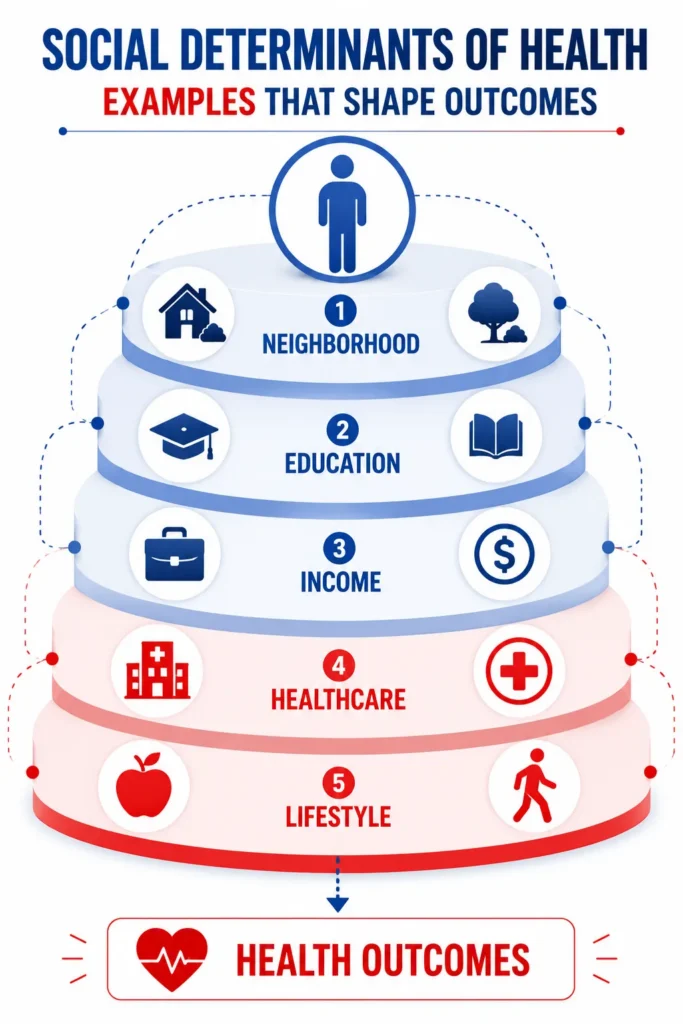
This brings us to social determinants of health examples, which is just a formal way of describing the everyday conditions that shape someone’s health long before they ever step into a doctor’s office.
Think about housing stability. Someone dealing with unstable housing is going to struggle to manage a chronic condition, no matter how good their doctor is. Food access matters, too. A person living in a food desert with limited access to fresh produce faces a much harder path toward good nutrition than someone with a grocery store down the street.
Transportation, safe neighborhoods, job security, and access to quality education all count as social determinants of health examples as well. These factors often matter more to someone’s long term health than anything that happens inside a clinic.
Maternal Health Disparities
One area where these gaps show up with particularly serious consequences is maternal health disparities. Women in certain communities face significantly higher rates of pregnancy related complications and maternal mortality than others, even when adjusting for income and education.
This isn’t a small statistical footnote. It represents real families and real loss. A lot of it comes down to unequal access to prenatal care, bias within the healthcare system, and delayed treatment during complications that should have been caught earlier. Addressing maternal health disparities has become a major focus for public health organizations precisely because the gap is so wide and so preventable.
What Is Culturally Competent Care
A big part of the solution comes down to something called culturally competent care. So, what is culturally competent care exactly? It means healthcare providers actively understanding and respecting the cultural backgrounds, beliefs, and communication styles of the patients they serve.
This isn’t about treating every patient the same. It’s actually the opposite. It means recognizing that a patient’s cultural context can shape how they understand a diagnosis, whether they trust a treatment plan, and how comfortable they feel asking questions in the first place.
A clinic that practices this well tends to build stronger trust with the communities it serves, which directly improves how well patients follow through on their care.
Healthy People 2030 Goals
At a national level, the Healthy People 2030 goals set specific benchmarks aimed at closing these gaps. This federal initiative outlines measurable targets across areas like maternal health, chronic disease prevention, and access to care, all with the specific aim of reducing disparities rather than just tracking them.
Having these kinds of formal goals matters because it gives public health organizations, clinics, and policymakers something concrete to work toward, rather than just acknowledging the problem exists without a plan to address it.
Public Health and Health Equity
All this ties back to the broader relationship between public health and health equity. Public health as a field has increasingly shifted its focus toward equity specifically. Recognizing that improving average outcomes across a population isn’t enough if certain groups keep getting left behind in that average.
This shift shows how funding gets allocated, how community health initiatives get designed, and how outcomes get measured going forward. It’s a meaningful change in approach, moving away from broad strokes and toward much more targeted, community specific solutions.
Community Health Initiatives Making a Real Difference
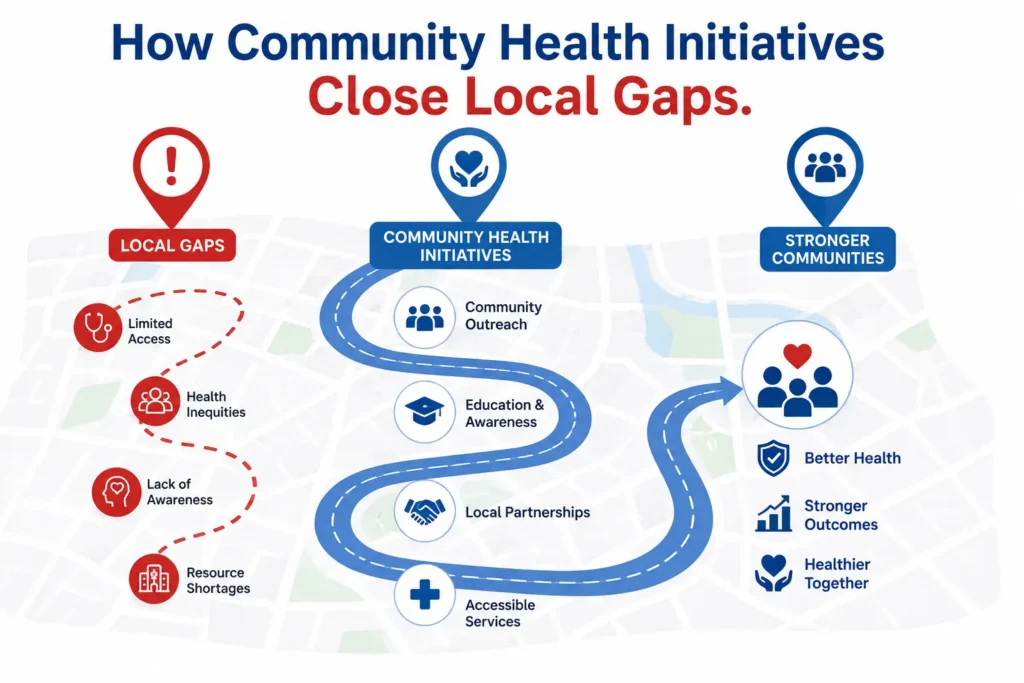
Community health initiatives are often where this work happens on the ground. These programs might include mobile health clinics reaching underserved neighborhoods; education campaigns tailored to specific communities, or partnerships between local clinics and schools to catch health issues early.
What makes these initiatives effective is that they’re built around the specific needs of the community they serve, rather than a generic; one size fits all approach handed down from somewhere else entirely.
Finding Affordable Primary Care Near Me
For a lot of families, the search for affordable primary care near me is where this entire conversation becomes personal. Understanding disparities and inequity matters, but at some point, people just need somewhere to actually go for care that they can afford and trust.
Having access to a nearby, affordable clinic isn’t just convenient. It’s often the deciding factor in whether someone seeks preventive care early or waits until a minor issue turns into a much bigger, more expensive problem.
A Community Health Clinic in McKinney TX
This is exactly the gap a community health clinic in McKinney TX aims to fill. Local clinics that prioritize accessibility, cultural understanding, and genuine relationships with patients play a real role in closing these disparities, one patient, and one appointment at a time.
Closing health gaps doesn’t happen through policy alone. It happens through everyday access, trust, and consistent care within the communities that need it most.
Health disparities are differences in health outcomes, disease rates, or access to healthcare between groups of people. These differences can be linked to factors such as age, location, income, or social conditions.
Health inequality refers to measurable differences in health outcomes between groups. Health inequity goes further by describing differences that are unfair, avoidable, and often caused by social, economic, or systemic barriers.
Race and health disparities are connected through factors such as unequal access to quality care, differences in social conditions, discrimination, and historical barriers. These factors can contribute to differences in health outcomes among racial and ethnic communities.
Racial disparities in healthcare may include differences in preventive care, treatment options, diagnosis, and health outcomes. Some communities may experience barriers such as limited healthcare access, language challenges, or unequal treatment.
Understanding health inequity helps identify the root causes behind health differences and supports solutions that improve access, fairness, and opportunities for better health outcomes for all communities.
Yes. Improving healthcare access, addressing social factors, increasing awareness, and creating equitable healthcare systems can help reduce preventable health gaps.
Closing Health Gaps Requires More Than Awareness
Health disparities describe the gap. Health inequity explains why that gap exists and why it’s unfair. Closing it takes more than awareness; it takes accessible, culturally aware of care delivered consistently within the community. Peoples Medical Care in McKinney works toward exactly that, offering affordable, patient centered primary care that treats every patient with the understanding and respect they deserve, regardless of background or circumstance.