
We talk a lot about the dangers of excess weight, but being underweight carries its own set of serious health risks that rarely get the same attention. Somewhere along the way, thinness got mistaken for automatic health, and that assumption can quietly delay a diagnosis that needed attention months ago.
If you or someone you know has been losing weight without trying, or has stayed noticeably thin despite eating what seems like enough, it’s worth paying attention. Being underweight carries real health risks. Understanding what might really be going on underneath is the first step.
Key Takeaways:
- Underweight carries real risks, not just appearance concerns.
- Malabsorption can cause weight loss despite eating normally.
- Blood testing often reveals hidden causes.
- Normal labs don’t always rule out a problem.
- Peoples Medical Care McKinney can guide proper evaluation.
What Being Underweight Actually Means
Doctors generally use body mass index as a starting point, with a BMI under 18.5 typically falling into the underweight range. That said, BMI alone doesn’t tell the whole story. Muscle mass, frame size, and overall body composition all factor into whether a number on a chart reflects a health concern.
What matters more than the number itself is the pattern behind it. Someone who has always run naturally thin and stays energetic, strong, and well-nourished is in a very different situation than someone who recently dropped weight without changing their diet or activity level.
The Real Health Risks of Being Underweight
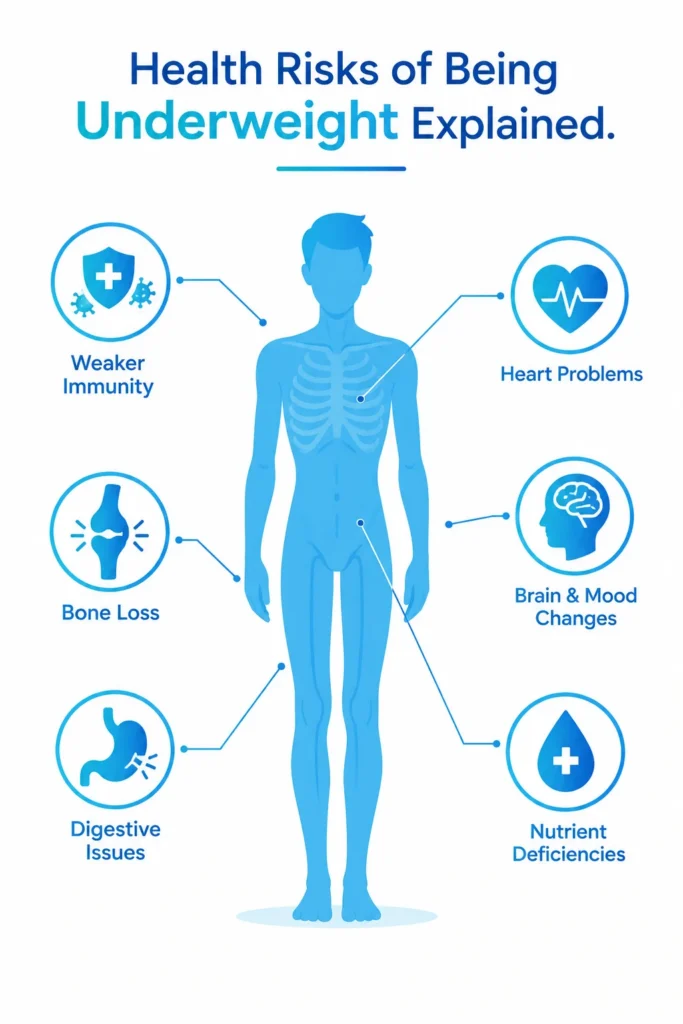
The health risks of being underweight go well beyond appearance. A body that doesn’t have enough reserves of struggles to maintain basic functions the way it should.
Weakened immunity is one of the first things to show up, making illnesses last longer and hit harder. Bone density often suffers too, raising the risk of fractures and osteoporosis later in life. Hormonal imbalances are common, which can affect periods, fertility, and even mood regulation.
Fatigue becomes a constant companion for many underweight individuals, since the body simply doesn’t have enough fuel to keep energy levels steady throughout the day. Cold intolerance, slow wound healing, and difficulty concentrating are also frequently reported. Over time, chronic low weight can even affect heart function. The heart muscle itself needs adequate nutrition to work properly.
Dangers of Being Underweight That Often Get Missed
Some of the dangers of being underweight are easy to overlook because they build slowly. People often write off hair thinning, brittle nails, and dry skin as just cosmetic problems. But they can actually be signs that your body is struggling and cutting back on things like hair and nail growth to focus on more essential functions.
Digestive problems are another quiet warning sign. When the body isn’t getting enough nutrients, digestion itself can slow down, leading to bloating, discomfort, and further difficulty absorbing what nutrients are available. This creates a frustrating cycle that can be hard to break without medical guidance.
When Malabsorption Is the Hidden Cause
For some people, the issue isn’t how much they’re eating but how much their body is absorbing. Malabsorption weight loss happens when the digestive system fails to properly absorb nutrients from food, regardless of how balanced the diet looks on paper.
Conditions like celiac disease, Crohn’s disease, and chronic pancreatitis are common culprits behind this kind of unexplained weight loss. Someone dealing with malabsorption might eat consistently and still keep losing weight. That understandably feels confusing and frustrating without a clear explanation.
This is exactly the kind of situation where self-diagnosing or simply trying to eat more doesn’t solve the underlying problem. A proper medical workup is often the only way to identify what is actually happening internally.
Why Blood Testing for Weight Loss Matters
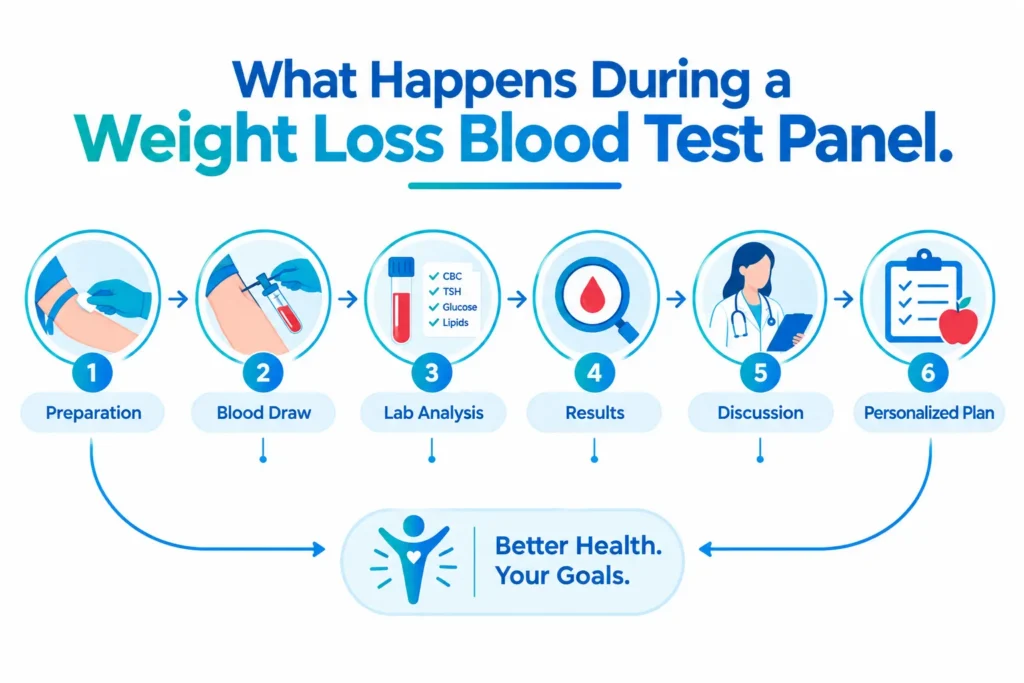
Blood testing for weight loss is usually one of the first steps a doctor takes when unexplained weight loss shows up. These tests can reveal a lot that isn’t visible on the surface.
Metabolism blood tests often check thyroid function, since an overactive thyroid can cause the body to burn through calories much faster than normal. Complete blood counts can flag anemia or signs of infection. Inflammatory markers may point toward autoimmune or digestive conditions that need further investigation.
Metabolic testing weight loss panels dig even deeper, looking at how the body is processing nutrients and energy overall. People sometimes call these obesity labs, but the same panels work just as well for unexplained weight loss as they do for weight gain concerns.
When Weight Loss but Blood Tests Normal Still Happens
One of the more frustrating situations patients run into is unexplained weight loss, but blood tests are normal. Standard panels don’t always catch everything on the first pass, and some underlying issues require more specialized testing or imaging to uncover.
This doesn’t mean nothing is wrong. It usually means the investigation needs to continue rather than stopping. A good primary care physician weight loss evaluation involves looking at the full picture, including diet history, stress levels, sleep patterns, and any recent life changes, not just a single round of lab results.
Approaching Weight Gain the Right Way
For those who do need to gain weight under medical guidance, the goal isn’t simply eating more of anything. A thoughtful weight gain diet plan focuses on nutrient dense, calorie dense foods for weight gain rather than empty calories that offer little nutritional value.
Foods like nut butters, whole grain products, healthy oils, and protein rich options tend to support steady weight gain. This works far better than relying on sugary or highly processed foods. This kind of plan works best when a healthcare provider helps build it, since they understand the real reason behind the weight loss. The right approach really does depend on what’s causing it.
When to Actually See a doctor
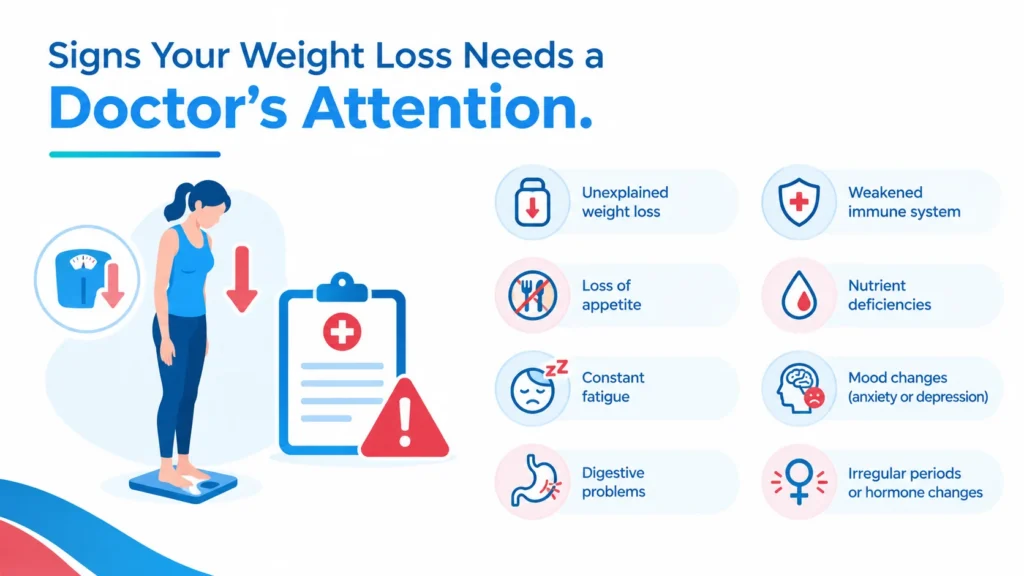
It’s easy to put off a doctor’s visit when nothing feels urgent, but certain signs shouldn’t be ignored. Losing a noticeable amount of weight without trying persistent fatigue, irregular periods, frequent illness, or digestive symptoms that don’t resolve on their own are all good reasons to schedule an evaluation.
A primary care physician weight loss visit typically starts with a conversation about your history, followed by blood testing for weight loss and a physical exam. From there, your doctor can determine whether further testing, referrals, or a structured plan makes sense for your specific situation.
Not always. Some people are naturally thin and stay healthy, energetic, and well-nourished without any underlying issues. It becomes a concern when weight loss is sudden, unexplained, or shows up alongside fatigue, hair loss, irregular periods, or other symptoms that don’t have an obvious cause.
Blood testing for weight loss is usually the starting point for proper evaluation. This often includes thyroid panels to check for an overactive thyroid, complete blood counts to rule out anemia or infection, and broader metabolic testing to see how the body is processing nutrients and energy overall.
Standard panels don’t always catch everything on the first pass. When results come back normal, but the weight loss continues, it usually means the investigation needs to go further rather than stop there. Additional testing or imaging may be needed to uncover conditions like malabsorption issues that don’t always show up on a basic panel.
Calorie dense, nutrient rich foods like nut butters, whole grains, healthy oils, and lean proteins support gradual, sustainable weight gain far better than relying on sugary or highly processed options that offer little nutritional value.
If you’re losing weight without trying, feeling constantly fatigued, or noticing symptoms like digestive issues or frequent illness, it’s a good time to schedule a primary care physician weight loss evaluation to get a clear answer.
How Peoples Medical Care Can Help
At Peoples Medical Care in McKinney, the team understands that unexplained weight changes deserve real investigation, not a quick dismissal. Whether the concern is a stubborn weight gain diet plan that isn’t working the way it should, or the confusion of unexplained weight loss but blood tests normal, the clinic takes time to notice. It looks at the full picture rather than treating one number alone. That’s how real answers show up.
Being underweight isn’t automatically a red flag but ignoring the signs your body is sending can let a real issue go unaddressed for far too long. If something feels off, trust that instinct and get it checked out properly.