Healthcare keeps changing. Apps let you book a visit in seconds; virtual calls connect you with a doctor from your couch, and new tools catch things that would have gone unnoticed years ago. Yet through all of it, one thing hasn’t lost weight. The patient physician relationship still shapes how good your primary care feels and works, and if anything, it matters more now than it used to.
Healthcare systems have grown bigger and more scattered. Patients bounce between apps, urgent care chains, and rotating providers who barely know their names. Against that backdrop, having one doctor who genuinely knows you starts to feel less like a nice extra and more like something worth protecting.
Key takeaway:
- Trust between doctor and patient improves outcomes.
- Whole person care catches what others miss.
- Coordinated care keeps nothing falling through the cracks.
- Clear communication builds trust faster than skill alone.
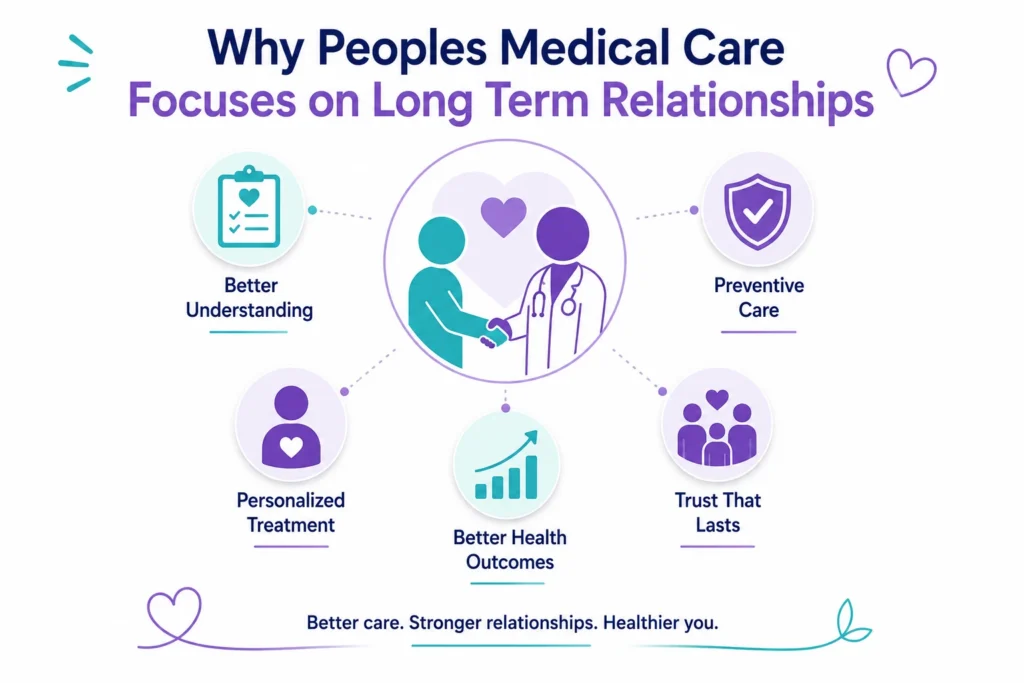
- Peoples Medical Care builds its whole approach around this relationship.
What This Relationship Really Looks Like
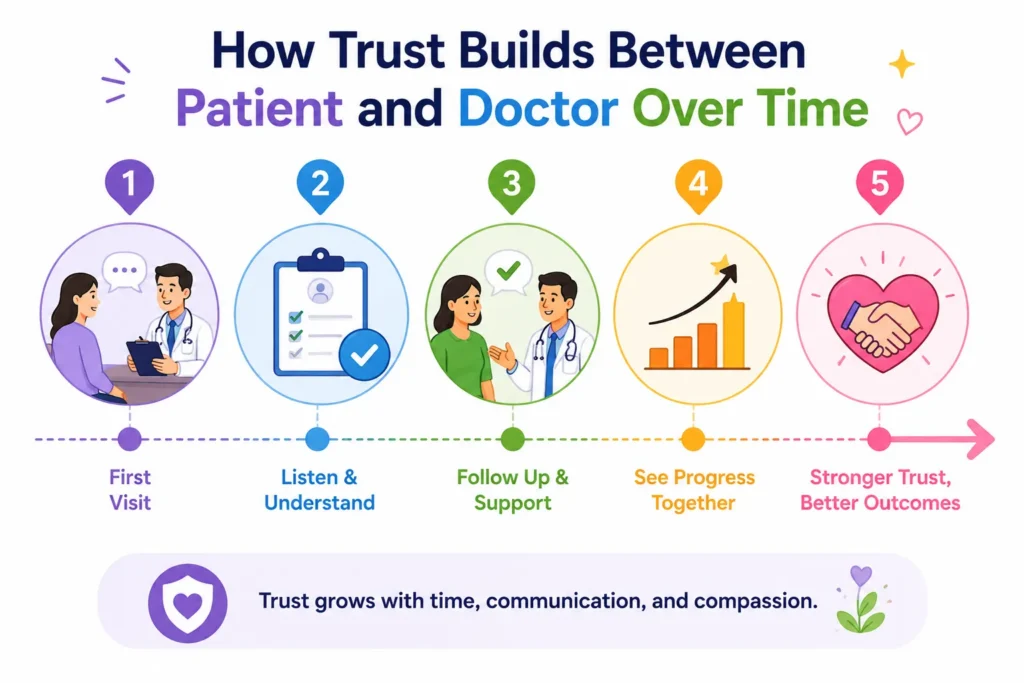
At its core, the patient physician relationship is the ongoing connection between you and your doctor. Trust builds it. Honest conversation feeds it. And a shared history holds it together over time. It isn’t just walking in, listing symptoms, and walking out with a prescription in hand.
Real relationships take repetition. Your doctor slowly learns your patterns, your worries, and the small details you mentioned once that turned out to matter later. This bond becomes the foundation for everything else in primary care that rests on. Even a perfectly designed treatment plan can fall apart if the patient behind it doesn’t trust the person who wrote it.
How It Shapes Patient Satisfaction
Patient satisfaction tends to follow how connected someone feels to their doctor. People who feel genuinely heard during appointments walk away more satisfied, even when their actual medical results look no different from someone who felt rushed through the door.
That tracks with plain common sense. A five-minute rushed visit makes anyone feel like a name on a list. A conversation where the doctor looks up, asks a follow up question, and remembers what you said last time feels like real care. Clinics that make room for this kind of attention, and Peoples Med Care is one example, tend to keep patients coming back because people feel seen instead of processed.
Why the Relationship Drives Quality of Care
We usually measure quality of care through numbers like test results and recovery rates. But the relationship sitting underneath those numbers carries just as much weight. A physician who knows your history catches small changes faster, skips test you don’t need, and lands on the right diagnosis sooner.
Something simpler happens, too. Patients open more to a doctor they trust. Details they might otherwise keep quiet, out of embarrassment or because they simply forgot, come out naturally in a comfortable conversation. That fuller picture leads to better decisions, rather than a doctor working with half of the story.
Patient Engagement Needs Connection to Grow
Patient engagement, meaning how involved you stay in managing your own health, depends heavily on how much you trust the person guiding you. When trust exists, you ask more questions. You follow through on the plan instead of setting it aside. You take ownership of the lifestyle changes that are genuinely hard to stick with.
Without that trust, people tend to check out. Appointments get skipped; advice gets brushed aside, and care only happens once things get bad enough to force the issue. Building real engagement takes more than good intentions on either side. It takes a provider who shows up consistently, listens without rushing, and follows through, a standard clinic like Peoples Med Care try to hold onto for the communities they serve.
Healthcare Works Better as a True Partnership
Good primary care today looks less like instructions handed down from above and more like a genuine healthcare partnership. Each side brings something real to the table. You understand your own body and your daily life better than anyone. Your doctor brings clinical training and years of medical judgment.
When those two things actually combine, instead of one side dominating the conversation, the resulting plan works better because it fits both medical reality and your actual life. This marks a real shift from the older style of medicine, where a doctor simply told you what to do and expected you to follow along. None of it works without trust and honest communication underneath it.
Communication That Actually Lands
Effective communication in healthcare isn’t just about a doctor saying the right words in the right order. It’s about whether you leave the room actually understanding what was said. A physician can explain a treatment plan flawlessly from a clinical standpoint, but if you walk out confused or overwhelmed, that conversation hasn’t done its job.
Good communication means plain language, real listening, and enough time that you don’t feel silly asking a basic question. It also means the doctor checks that you’ve understood, rather than assuming a rushed five-minute explanation stuck. Clinics that take this seriously tend to see patients sticking to their treatment plans better, with fewer mix ups down the road.
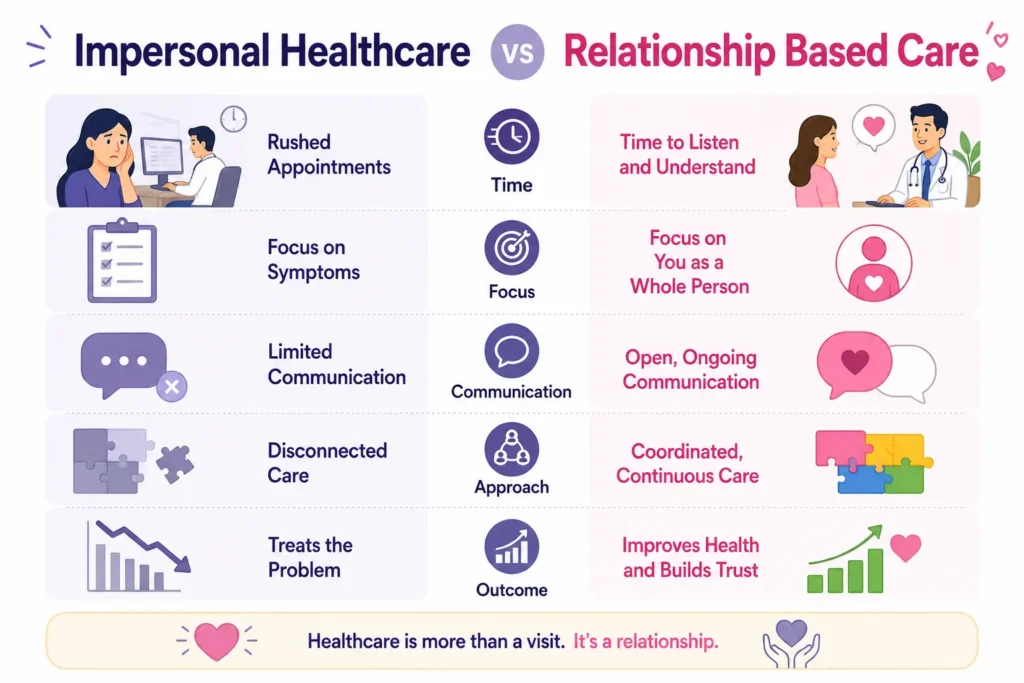
Treating the Whole Person, Not Just the Symptom
Whole person care means looking past whatever single complaint brought you in and considering your full physical, mental, and emotional health together. It comes from recognizing that health problems rarely show up alone. Someone dealing with chronic back pain, for example, often struggles with anxiety or poor sleep tied to that same pain.
Holistic primary care carries this same thinking into every visit, treating each appointment as part of a bigger story instead of a standalone event. That only works when a physician knows you well enough to notice patterns forming over time, which circles back to a relationship built on consistency. Practices that lean into this approach, something you can see reflected in how Peoples Med Care structures its visits, tend to catch problems earlier and deal with root causes rather than just patching symptoms.
Why a Patient Centered Medical Home Changes Things
A patient centered medical home organizes your care around you instead of scattering it across disconnected departments and specialists. Under this model, your primary care team handles the coordination, referrals, lab results, and follow ups, so nothing slips through the cracks between providers.
This structure naturally strengthens the doctor’s patient bond, since your primary care physician becomes the central figure guiding your healthcare rather than one stop among many. Having a single, trusted person steering things cuts down on confusion and builds real confidence as time passes.
Respecting Patient Rights Along the Way
None of this holds up without genuine respect for patient rights in healthcare. That includes your right to understand your treatment options, ask questions freely, expect privacy, and ultimately make decisions about your own care.
When a physician actively honors these rights, patients feel safer opening up during appointments. That kind of transparency builds trust in a real way, because you can tell your autonomy and dignity matter, not just your paperwork.
Language Barriers Shouldn’t Get in the Way
Language barriers in healthcare remain one of the biggest obstacles to building a strong relationship with a doctor. When someone struggles to explain their symptoms clearly, or doesn’t fully grasp the instructions they’re given, the whole relationship takes a hit, no matter how skilled the physician happens to be.
Clinics that make communication genuinely accessible, whether through multilingual staff or clear translation support, remove that barrier and let trust build the way it should. This matters even more in diverse communities, where patients arrive from a wide range of backgrounds and languages, turning inclusive communication into a real necessity rather than a nice extra.
How to Choose a Doctor You’ll Actually Trust
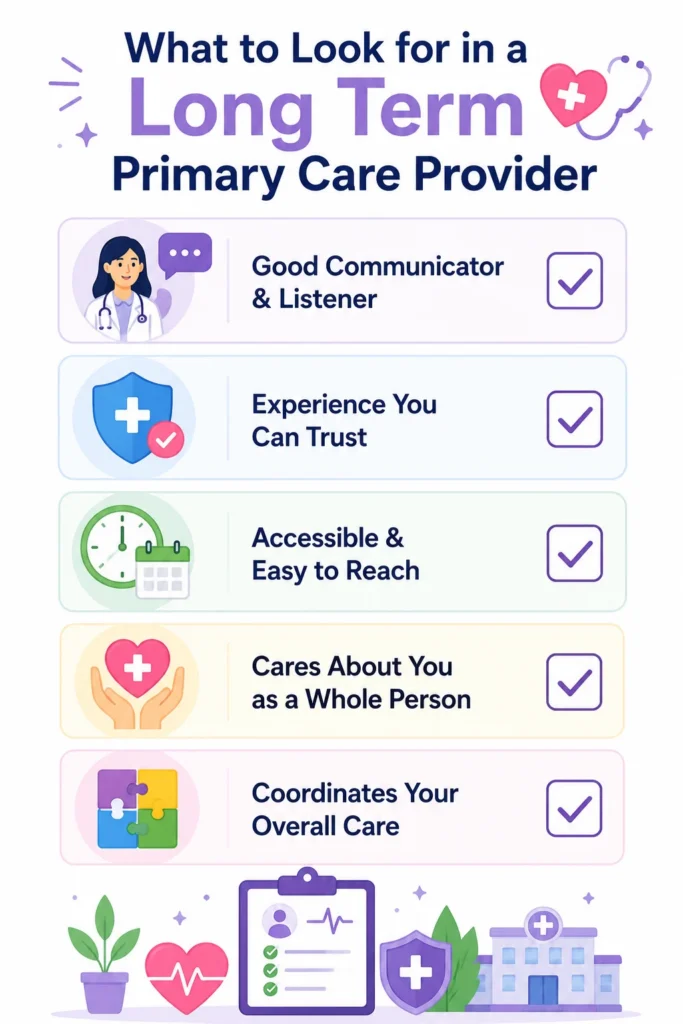
Knowing how to choose a doctor is a skill most people never sit down and think through. Many pick up a provider purely based on convenience or insurance coverage, without asking whether the relationship itself will actually work. A few things deserve real attention here.
Look for someone who takes time to listen instead of rushing you out the door. Notice whether they explain things in a way you can actually follow, rather than burying you in medical terms. Pay attention to whether they seem genuinely curious about your overall wellbeing, not just the single complaint that brought you in that day.
The clinic environment matters just as much. A provider backed by a team that values coordinated, patient centered care, the kind of approach Peoples Med Care takes, tends to deliver the consistent, relationship driven experience that leads to better outcomes down the line.
Communication Built Around You
Patient centered communication puts your needs, your preferences, and you’re understanding at the center of every conversation, rather than following a script that treats every patient the same way. Some people want a full clinical breakdown. Others just want to know what to do next without extra detail. Some need more reassurance, while others want to jump straight to solutions.
A physician skilled in patient centered communication picks up on these cues and adjusts accordingly. That flexibility makes a real difference. It’s what makes patients feel like individuals instead of another chart in a stack of files.
Why This Relationship Matters More Now Than Ever
As healthcare systems keep growing and getting more complicated, it’s easy to feel like just another appointment squeezed into a packed schedule. Telehealth, urgent care chains, and rotating providers have all made continuity harder to hold onto in a lot of places.
Against that backdrop, the patient physician relationship stands out as one of the few steady anchors people can count on. It brings stability to a system that can otherwise feel scattered, making sure someone genuinely pays attention to your full health picture instead of just patching symptoms during a rushed ten-minute visit.
Clinics that keep prioritizing this relationship, rather than trading it away for speed or higher patient volume, end up offering a higher standard of care. You’ll see that philosophy reflected in how Peoples Med Care approaches primary care, built around lasting relationships rather than one off transaction.
Your doctor listens without rushing, remembers past details, explains things clearly, and follows up when needed. You feel comfortable asking questions and leave appointments actually understanding what was discussed.
Satisfaction surveys give clinics direct feedback on communication gaps, wait times, and whether patients feel heard. Practices like Peoples Medical Care use this feedback to keep improving rather than assuming everything is fine.
You ask questions, follow through on treatment plans, and make lifestyle changes because you trust your provider. Without that trust, most people skip appointments and ignore advice until something forces the issue.
You bring knowledge of your own body and daily life. Your doctor brings clinical training and judgment. When both combine honestly, the plan fits your medical reality and your actual life instead of just looking good on paper.
It means leaving the appointment understanding what was said. Plain language, real listening, and enough time to ask questions without feeling rushed are what separate effective communication from a five-minute information dump.
Where This Leaves Us
The future of primary care will keep bringing more technology, more data, and more efficiency. But none of that fully replaces what happens when a patient and a physician actually know each other and trust each other.
Patients who find the right primary care provider and commit to honest communication over time tend to end up healthier, more satisfied, and more in control of their own care. In a system that can feel impersonal, this relationship remains one of the strongest tools patients have for protecting their long-term health.
At Peoples Medical Care in McKinney, Dr. Zulfarah Ishaque and Dr. Munaza Gohar bring exactly that kind of care to every patient. Visit peoplesmedcare.com or call the office to schedule your appointment today.