
Nobody sits down one morning and decides today is the day they get chronic conditions. It just happens. A routine blood test comes back with numbers that were not there last year. A cough that never fully goes away starts waking you up at three in the morning. Your joints ache so badly some days that getting out of bed feels like the hardest thing you will do all day.
Chronic conditions do not announce themselves dramatically. They creep quietly and then one day you realize they have been there for a while. Diabetes. High blood pressure. Thyroid problems. Asthma. Obesity. Arthritis. These are not rare situations. They are the everyday reality for tens of millions of adults across America and for a lot of adults right here in McKinney, Texas.
Key Takeaway:
- Most chronic conditions cannot be cured, but the right chronic condition care plan can get them to a point where they barely affect your daily life
- Diabetes, arthritis, thyroid disease, and asthma all connect to each other in ways that make treating just one at a time a losing game
- A real chronic disease management plan tracks your numbers, adjusts your treatment, and moves with you as your health changes
- Most adults with hypothyroidism and adult onset asthma go undiagnosed simply because the symptoms never look the way people expect them to
- Obesity is a recognized chronic disease shaped by genetics, hormones, and environment, and treating it like a willpower problem is both wrong and unhelpful
Why Does Everyone Keep Talking About Chronic Disease Management
Most people have heard the phrase, but very few could tell you what it actually means day to day. What is chronic disease management? It is a way of treating long-term health conditions that focuses on staying ahead of problems rather than only responding when things go wrong.
Instead of showing up to the doctor when something hurts badly enough to force the issue, a chronic disease management plan keeps your condition monitored, your treatment adjusted as your body changes, and your risk of serious complications as low as possible. It is the difference between reacting and planning. And for anyone managing a condition that is not going to disappear on its own, that difference matters enormously.
The Honest Answer Nobody Really Gives for Chronic Illness
This is the question that sits in the back of almost every newly diagnosed patient’s mind. Can chronic illness be cured? For most of the conditions covered in this guide the straight answer is no, not in the way people usually mean when they ask that question. But here is what that answer does not mean.
It does not mean your life is over. It does not mean you will feel terrible forever. And it does not mean things cannot get dramatically better than they are right now. Plenty of people with diabetes, hypertension, thyroid disease, and asthma reach a point where their condition is so well managed that it barely registers in their daily life. The goal of a chronic disease management plan is not a cure. It is getting you to that place where the condition stops being the loudest thing in the room.
What Do the Numbers Actually Show About Chronic Diseases in Older Adults
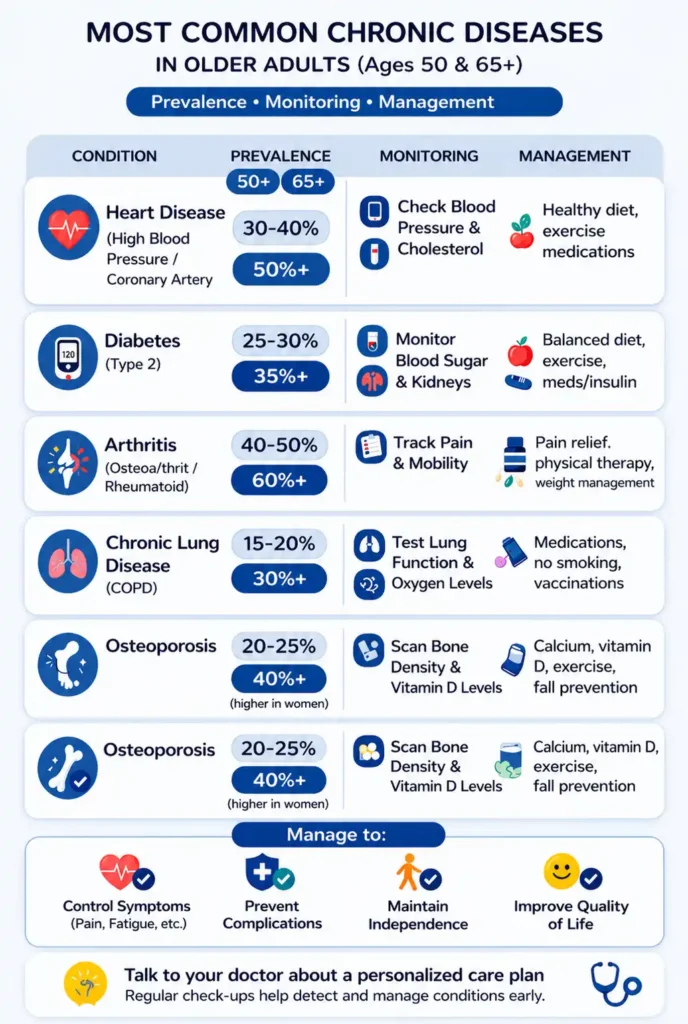
If you are an adult over 50 in America, there is a real chance you are already managing at least one of these. The most common chronic diseases in older adults include heart disease, type 2 diabetes, high blood pressure, arthritis, asthma and other respiratory conditions, thyroid disorders, and obesity. What most people do not realize is that a lot of adults are not dealing with just one of these. They are managing two or three at the same time and each one affects how the others behave.
This is exactly why chronic condition care that looks at the full picture is so much more effective than treating each condition separately. Your blood pressure affects your heart; weight affects your joints and your blood sugar. Your thyroid affects your energy, your mood, and your metabolism. It all connects. And that connection is what a real chronic disease management plan is built to account for.
Do You Actually Need a Specialist to Manage Your Diabetes
There is a common assumption that managing diabetes means being passed off to a specialist and spending your life going from one appointment to another. But diabetes and primary care are actually a very natural fit, especially for type 2 diabetes. Most people with type 2 diabetes can have their condition managed fully within a good primary care relationship as long as that relationship involves regular monitoring and a doctor who actually knows their history.
That means regular HbA1c checks. Blood pressure monitoring. Kidney function panels. Foot exams. A review of how your numbers are trending over months and years rather than just a snapshot at one visit. When diabetes and primary care work together the way they should, the condition becomes something you manage rather than something that manages you.
Do You Actually Need a Specialist to Manage Your Diabetes
A lot of people with arthritis have accepted that pain is just part of life now. They take something for it when it gets bad and push through the rest of the time. But searching for arthritis pain management near me is one of the most common things for adults in over 50 types of Google for good reason. Pain is real and the options for managing it are better than most people think.
Good arthritis management is not one thing. It is a combination of reducing inflammation through diet and medication, keeping joints moving through low impact activity, managing weight because extra weight puts direct strain on joints, and reviewing what medications are helping versus just masking the problem temporarily. The people who do their best with arthritis are the ones who treat it like the chronic condition it is rather than just something to get through day by day.
Is Obesity Really a Choice or Is It Actually a Disease
This conversation needs to happen more honestly than it usually does. Is obesity a choice? No. Not in the straightforward way that word implies. Obesity is classified as a chronic disease by every major medical organization in the world. It is shaped by genetics, hormones, metabolism, stress levels, sleep quality, environment, medications, and yes, lifestyle choices too. But lifestyle is one thread in a much more complicated picture.
Understanding the difference between overweight and obese matters here. Overweight means a BMI between 25 and 29.9. Obesity starts at a BMI of 30 and above. But BMI alone does not tell you everything. Two people can have the same BMI and have completely different health profiles depending on where weight is distributed and what their other health markers look like.
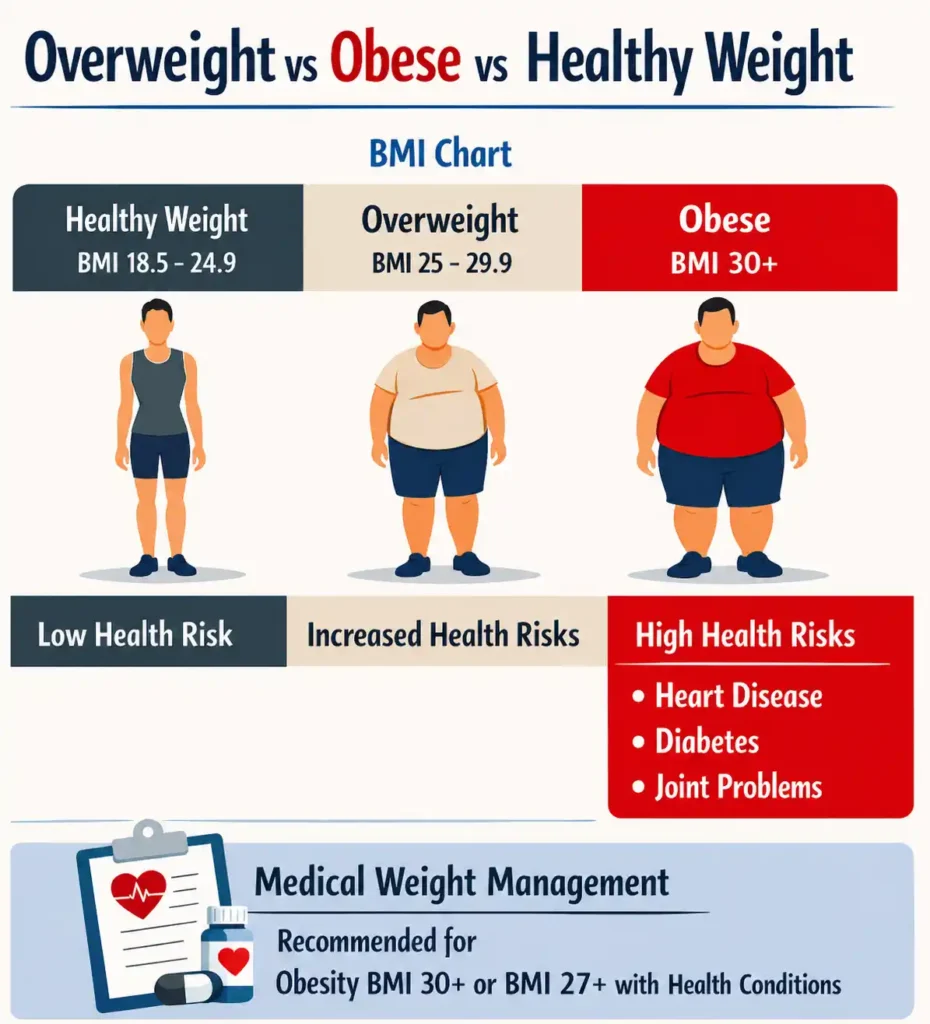
Obesity issues in America are not getting smaller. More than 40 percent of American adults are currently living with obesity. That number has been climbing for decades, and it is not climbing because millions of people suddenly stopped caring about their health. It is climbing because the conditions that drive obesity are built into modern life in ways that willpower alone cannot undo. Treating it as a moral failure rather than a medical condition is not just unkind. It is also just medically wrong.
Why Do So Many Adults Miss Their Hypothyroidism Diagnosis
Adults with hypothyroidism often go undiagnosed for longer than they should. The reason is straightforward. The symptoms do not feel dramatic. You feel tired all the time even after a full night of sleep. Your weight goes up without your eating habits changing. You feel cold when others around you are comfortable. Your mood shifts in ways that are hard to explain. Your thinking feels slower than usual.
Each one of those symptoms on its own is easy to attribute to stress, aging, or just a rough stretch of life. Together, they point to something that a simple blood test can catch. Adults of any age can develop hypothyroidism, and women are significantly more likely to develop it than men, especially after 40. It also appears more frequently in people with a family history of thyroid disease and in those managing other autoimmune conditions.
What does a thyroid do that makes all of this happen?
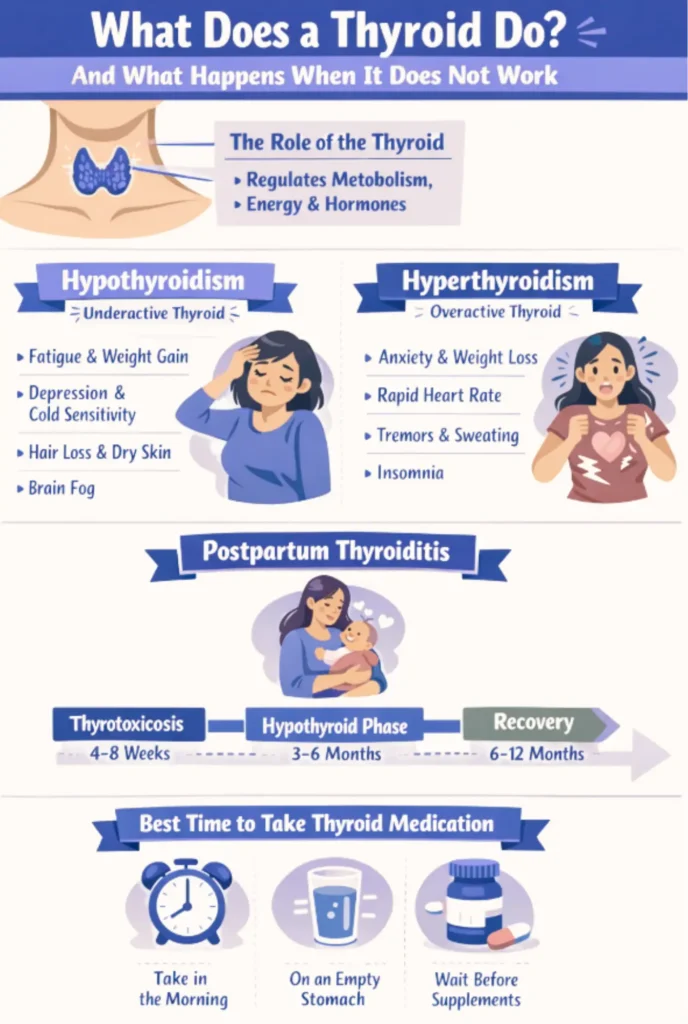
Your thyroid produces hormones that regulate nearly everything. Your metabolism, your energy levels, your body temperature, your heart rate, your mood, your ability to concentrate. When it slows down, everything slows down with it. When it speeds up, everything goes haywire in the other direction. Getting thyroid levels checked after pregnancy is not an overreaction. For a lot of women, it is genuinely the thing that changes how the whole first year of motherhood feels.
The best time to take thyroid medication once it is prescribed is the first thing in the morning on an empty stomach. At least thirty minutes before eating or taking anything else. Calcium, iron, and certain foods interfere with how the body absorbs it and can make even a correct dose less effective than it should be. Your doctor will be specific about timing based on your exact medication and your overall health picture.
What Are the Criteria for Asthma Diagnosis and Why Does It Look Different in Adults
Most people picture asthma as dramatic wheezing and reaching for an inhaler. But a large number of adults with asthma do not experience it that way at all. What they have instead is a dry asthma cough. It shows up at night when you are just trying to sleep. Exercise makes it worse. The moment air quality drops or the season shifts, it flares right back up. Weeks go by and there is no mucus, no clear sign of a cold, and it does not quite look like allergies either.
The criteria for asthma diagnosis involve looking at the pattern of symptoms over time, testing lung function, and identifying whether airflow restriction is present and whether it responds to treatment. A cough that comes and goes with environmental triggers, worsens at night, and does not respond to standard cold remedies is worth getting evaluated properly.
Unmanaged asthma does more than affect your breathing. It disrupts sleep, limits your ability to exercise, drains your energy, and over time puts extra strain on your heart. Managing it well means knowing your triggers, having the right medications, and knowing exactly what to do before something becomes a real emergency.
What a Real Chronic Disease Management Plan Looks Like in Practice
A chronic disease management plan is not a pamphlet you get handed at the end of an appointment. Think of it as something that grows with you, not a one-time printout. It tracks your conditions, watches how your numbers are moving, checks whether your medications are still doing their job, and keeps your next follow up on the radar.
It also includes knowing who to call when something shifts. Knowing the difference between a symptom that can wait until your next scheduled visit and one that needs attention today. And having a doctor who knows your full history well enough to make that call with you rather than starting from scratch every time you come in.
Yes, and it is one of the most missed signs of asthma in adults. A lot of people picture dramatic wheezing, but a dry cough that gets worse at night, flares after exercise, or shows up when the seasons change is often asthma. If a cough has been hanging around for weeks and nothing seems to fix it, getting a proper evaluation is worth it.
It essentially puts everything into overdrive. Your heart beats faster, your weight drops without trying, you feel anxious or irritable, and sleeping becomes difficult even when you are exhausted. Your body is running at a pace it was not built to sustain. Left unmanaged, an overactive thyroid puts real strain on your heart and bones over time.
It is genuinely both, and neither tells the full story on its own. Genetics, hormones, metabolism, sleep, stress, medications, and environment all play a role. Lifestyle matters too, but it is one piece of a much bigger picture.
Staying consistent when you feel fine is the biggest one. A lot of people ease off on their care plan once symptoms settle down, and that is usually when things quietly start slipping. Juggling multiple conditions at once, managing medications, and keeping up with follow up appointments all add up fast without the right support.
There is no single answer because it depends entirely on the condition. What works across the board is having a chronic disease management plan that gets reviewed and updated regularly, a doctor who knows your full history, and a treatment approach built around your life specifically rather than a general template.
You Have the Information Now Here Is Where to Start
When you are ready to build a real plan around your chronic condition, Peoples Medical Care McKinney is here. Dr. Zulfarah Ishaque and Dr. Munaza Gohar work with patients managing everything from diabetes and thyroid disease to arthritis, asthma, and obesity. This is not a clinic that hands you a pamphlet and sends you home. It is a team that builds a chronic disease management plan around your life specifically and stays with you as it evolves.
Visit us at 2001 Auburn Hills Pkwy, Suite 801, McKinney TX 75071. Book online at peoplesmedcare.com or call us at 469-902-8197. Monday through Friday, 8 AM to 5 PM. New patients welcome.