
North Texas has its own rhythm when it comes to getting sick. The moment the weather makes that sharp turn in October, something starts moving through schools, offices, and households across McKinney and the surrounding areas. First one kid, then a parent, then a coworker who sat next to someone on Monday. By the time you realize you have it, you have already lost a day to denial and two more to the couch.
Flu RSV season in North Texas is not a gentle thing. The combination of flu, RSV, and other seasonal respiratory illnesses hitting at the same time creates a stretch of weeks every fall and winter where a lot of families are just trying to stay on their feet. This guide covers what you need to know, how to tell what you have, what to do about it at home, and when to stop guessing and call a doctor.
Key takeaway:
- Flu comes on suddenly, while a cold develops gradually.
- Flu and COVID symptoms are similar testing is the only way to know for sure.
- Rest, hydration, and a gradual return to activity support better recovery.
- Flu in older adults can worsen quickly, especially if confusion or new symptoms develop.
- Annual flu vaccination and proper handwashing remain the best prevention tools.
Flu vs Cold: They Feel Different If You Pay Attention
Many people confuse the flu and a cold because both can cause a runny nose and make you feel miserable. But knowing the difference helps you decide what to do next.
The cold develops gradually. It often starts with a scratchy throat, followed by sneezing and congestion over several days. You may feel tired, but most people can still manage daily activities.
The flu is different. It comes suddenly, taking you from feeling fine to completely drain within hours. Body aches are often intense, affecting your back, legs, and even making your skin feel sore to the touch.
Fever is another key difference. While colds may cause a mild fever, especially in children, a fever of 102°F or higher is more typical of the flu. When high fever, chills, severe fatigue, and body aches appear together, flu is the most likely cause.
Flu vs COVID Symptoms: The Overlap That Trips Everyone Up
This is the question that has been on everyone’s mind for the last several years, and it is still a fair one. Flu vs COVID symptoms share a lot of common ground. Fever, body aches, fatigue, cough, sore throat, and congestion can all appear in both. There is no reliable way to tell them apart just by how you feel.
The practical answer is to test. Both flu and COVID tests are widely available, quick, and will give you a result in minutes at home or at a clinic. Knowing which one you have matters because the treatment paths are different. Antiviral medications for flu work best when started within the first 48 hours of symptoms.
COVID has its own treatment options depending on your health and risk level. Guessing and treating yourself for the wrong thing is one of the main reasons people take longer to recover than they should.
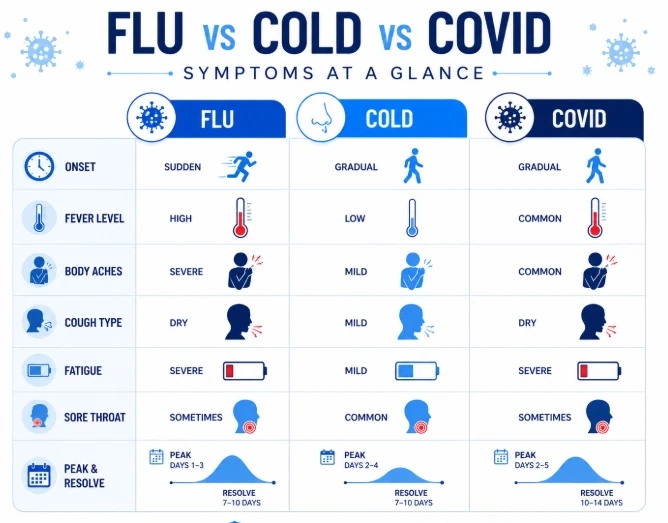
Flu vs Cold Symptoms Side by Side
Because people still confuse them, here is the plain version. Flu symptoms vs cold symptoms broken down simply.
Flus come fast, usually within hours. You feel genuinely ill rather than just under the weather. Fever is common and often high. Body aches are significant. Fatigue is serious. Headaches are frequent. Sore throat flu is possible. Cough tends to be dry and can become painful. A runny or stuffy nose is less prominent than a cold.
A cold builds gradually over one to three days. Fever is mild or absent in adults. Body aches are minimal. Fatigue is present but manageable. A sore throat often starts first. The cough tends to get wetter. A runny or stuffy nose is the defining symptom.
The key question is always this: did it hit fast or build slowly, and how bad does your body feel overall?
What Actually Helps for Flu Care at Home
Most people with the flu recover without medical treatment. Good Flu Care at Home focuses on rest, hydration, and symptom relief.
Rest is essential. Your immune system works best when you sleep, and pushing through illness can slow recovery and spread the virus to others.
Staying hydrated is equally important. Fever and sweating increase fluid loss, so drink water, broth, herbal tea, or electrolyte beverages regularly.
For body aches and fever, acetaminophen or ibuprofen can help. Warm showers may ease muscle soreness, while a cool cloth on the forehead can provide relief from fever.
Effective Flu Care at Home also includes creating a comfortable environment. A humidifier can reduce cough and congestion; a cool room may help with fever, and eating small, nutritious meals supports recovery even when your appetite is low.
Looking for Viral Cough Treatment? Here’s What Helps and What Doesn’t
A viral cough treatment question that comes up constantly is whether antibiotics will help. They will not. The flu is a virus, and antibiotics only work on bacteria. Taking antibiotics for the flu does not speed recovery and contributes to antibiotic resistance over time.
What does help a viral cough is keeping the throat moist, using a honey-based cough syrup, running a humidifier, staying well hydrated, and sleeping with your head slightly elevated to reduce postnasal drip. Cough suppressants from the pharmacy can help at night when the cough is disrupting sleep. During the day, letting the cough do its job of clearing the airways is generally better.
What to Actually Expect When Flu Recovery Time
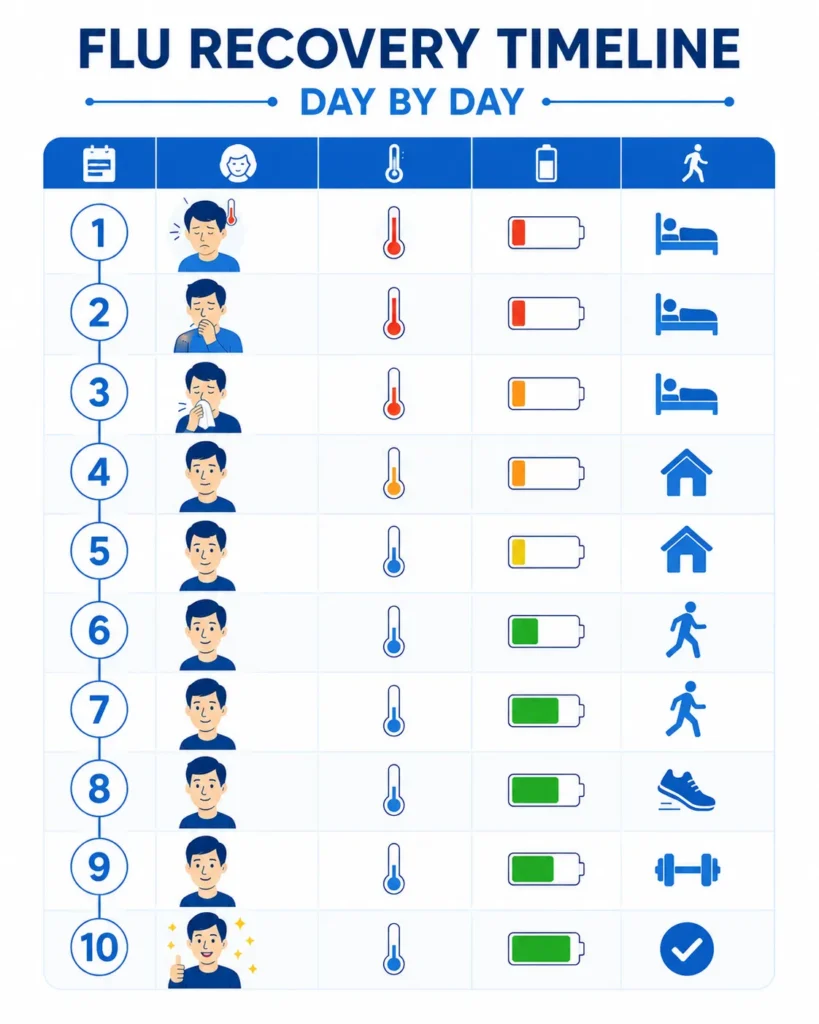
Flu recovery timeline varies more than people expect. Most people start to feel genuinely better somewhere between five and ten days. The fever usually breaks within three to five days. The body aches at ease before the cough does. Fatigue can linger longer than everything else, sometimes for another week or two after the obvious symptoms are gone.
Flu weakness in the weeks after the acute illness is real and common. Your immune system has done significant work, and your body is rebuilding. Trying to jump straight back into full activity the moment your fever breaks is one of the most common reasons people have a setback. The flu recovery tips that matter is boring: ease back in gradually, keep sleeping well, eat real food, and do not interpret the absence of fever as being fully better.
Flu Symptoms in Elderly Adults: A Different and More Serious Picture
Flu symptoms in elderly adults deserve their own conversation because the risk profile is genuinely different. Adults over 65 are significantly more likely to develop flu complications. What starts as a manageable illness in a healthy 35-year-old can progress into something much more serious in a 70-year-old, particularly one managing existing health conditions.
In older adults, the typical symptoms may be less pronounced. The fever may not be as high. The aches may be attributed to other causes. What shows up instead is sudden confusion, increased weakness, significant loss of appetite, worsening of an existing condition like heart disease or COPD, or breathing that becomes noticeably harder.
Flu complications in older adults include pneumonia, worsening heart conditions, and hospitalization at rates much higher than the general population. If you are an older adult or caring for one and the illness is not improving after three to four days or is getting worse rather than better, that is a reason to call a doctor rather than wait it out.
Flu Prevention Tips That Are Worth Your Time
Flu prevention tips always sound like things you already know. And most of them are. But knowing and doing are different things and the gap between them is where most people get sick.
The annual flu shot is the single most effective thing on the list. It reduces your risk of getting the flu, and if you do get it despite vaccination, it typically reduces how severe it is and how long it lasts. Getting it in September or October before the season peaks gives your immune system time to build protection.
Handwashing is genuinely the second most effective tool. Not a quick rinse, actual handwashing with soap for at least twenty seconds. The flu spreads through droplets but also through touching surfaces and then touching your face. Most people touch their face more often than they realize.
Keeping distance from people who are visibly sick is obvious but worth saying. Staying home when you are sick is just as important. The people most likely to develop flu complications are often people you would not think of protecting in the moment: elderly parents, infants, neighbors with compromised immune systems.
When to Go to Urgent Care for Flu and the Warning Signs That Should Never Be Ignored
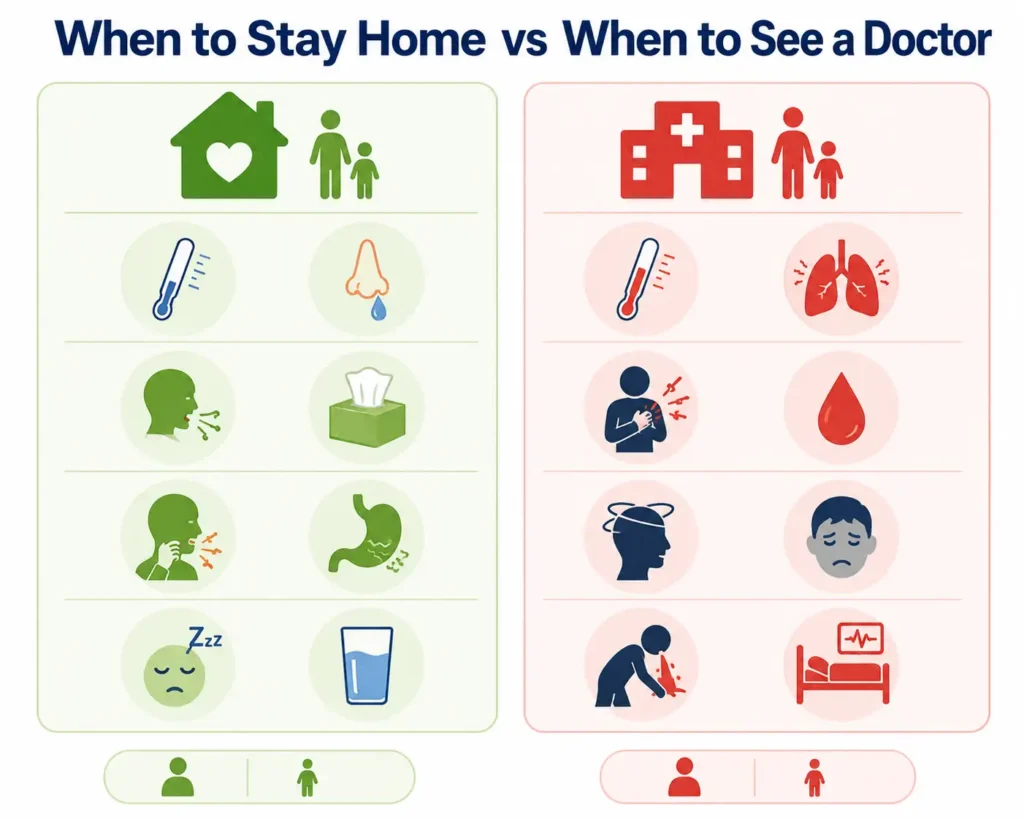
Most people with the flu will recover from home. But when to go to urgent care for flu is a question worth having a clear answer before you need it, because when you are sick and tired and running a fever is not the best time to think it through clearly.
Go in or call a doctor if your fever goes above 104 degrees, if breathing feels labored or different from normal, if you have chest pain or pressure, if you feel confused or significantly more disoriented than usual, if you cannot keep any fluids down for more than 24 hours, if your symptoms seem to be improving and then suddenly get worse again, or if you have a preexisting condition like asthma, heart disease, or diabetes and the flu is making it harder to manage.
For children, additional warning signs include rapid breathing, skin that looks blue or grey, a child who is not waking up or is unusually difficult to rouse, and severe irritability or inconsolability.
The flu clinic near me is one of the most searched terms during peak season in North Texas. Having an appointment already available at a clinic where your doctor knows your history is genuinely better than walking into unfamiliar urgent care and starting from scratch when you are already exhausted and unwell. Urgent care sore throat visits are common and manageable, but a provider who knows your background can give you more tailored care and flag things that might otherwise be missed in a brief walk-in visit.
The biggest difference is how quickly symptoms appear and how severe they feel. Flu usually comes on suddenly with fever, body aches, chills, and intense fatigue. A cold develops more gradually and is often limited to a runny nose, congestion, and sore throat.
Flu and COVID share many symptoms, including fever, cough, fatigue, body aches, and sore throat. Because they overlap so closely, testing is often the only reliable way to tell them apart. Early testing can also help determine the most appropriate treatment.
The most effective flu care includes plenty of rest, staying hydrated, managing fever with appropriate medications, and avoiding a quick return to normal activities. Giving your body time to recover can shorten recovery time and reduce complications.
Most people start feeling better within five to seven days, although fatigue and cough may last longer. If symptoms worsen, return after improving, or breathing becomes difficult, seek medical attention.
Seek care for high fever, dehydration, chest pain, breathing difficulties, confusion, or worsening symptoms, especially if you have underlying health conditions.
When Flu Symptoms Need Expert Care
Many people in McKinney try to push through flu season without medical support, but having a primary care provider can make a significant difference. A provider who knows your health history can determine whether you’re dealing with the flu, RSV, COVID, or a bacterial infection and recommend the right treatment for your situation.
At Peoples Medical Care McKinney, Dr. Zulfarah Ishaque and Dr. Munaza Gohar see patients for sick visits, including flu and respiratory illness evaluations, on-site testing, and personalized treatment guidance.
To schedule an appointment, visit peoplesmedcare.com or call 469-902-8197. We are located at 2001 Auburn Hills Pkwy, Suite 801, McKinney, TX 75071, and are open Monday through Friday, 8 AM to 5 PM. New patients are welcome.