Just heard the word prediabetes, and now your mind is racing? Most people feel fine, so the news hits out of nowhere. Here’s the good part. Prediabetes prevention works, and catching it now gives you the best chance to turn things around.
A small sensor called a CGM may help you see how meals, sleep, and stress move your blood sugar all day. It’s a tool for learning, not a test or a cure. This article explains what prediabetes means, what a CGM can and can’t do, and the simple steps you can take.
Key Takeaways
- Early detection of prediabetes can help reduce the risk of developing type 2 diabetes.
- A CGM helps track how meals, exercise, and sleep affect blood sugar levels.
- A balanced diet, regular exercise, and quality sleep support healthy blood sugar management.
- Regular A1C testing helps monitor blood sugar levels and track progress.
- Combining healthy habits, glucose tracking, and medical guidance can support long term diabetes prevention.
What Prediabetes Actually Means
Prediabetes means your blood sugar runs higher than normal, but not high enough yet for a type 2 diabetes diagnosis. Think of it as a warning sign. Your body is telling you something needs to change before things get worse.
Most people have no symptoms, so it often shows up during routine bloodwork. That’s why regular prediabetes screening matters, especially if you have a family history of diabetes, extra weight around your middle, or a mostly sitting lifestyle.
Can a CGM Diagnose Prediabetes?
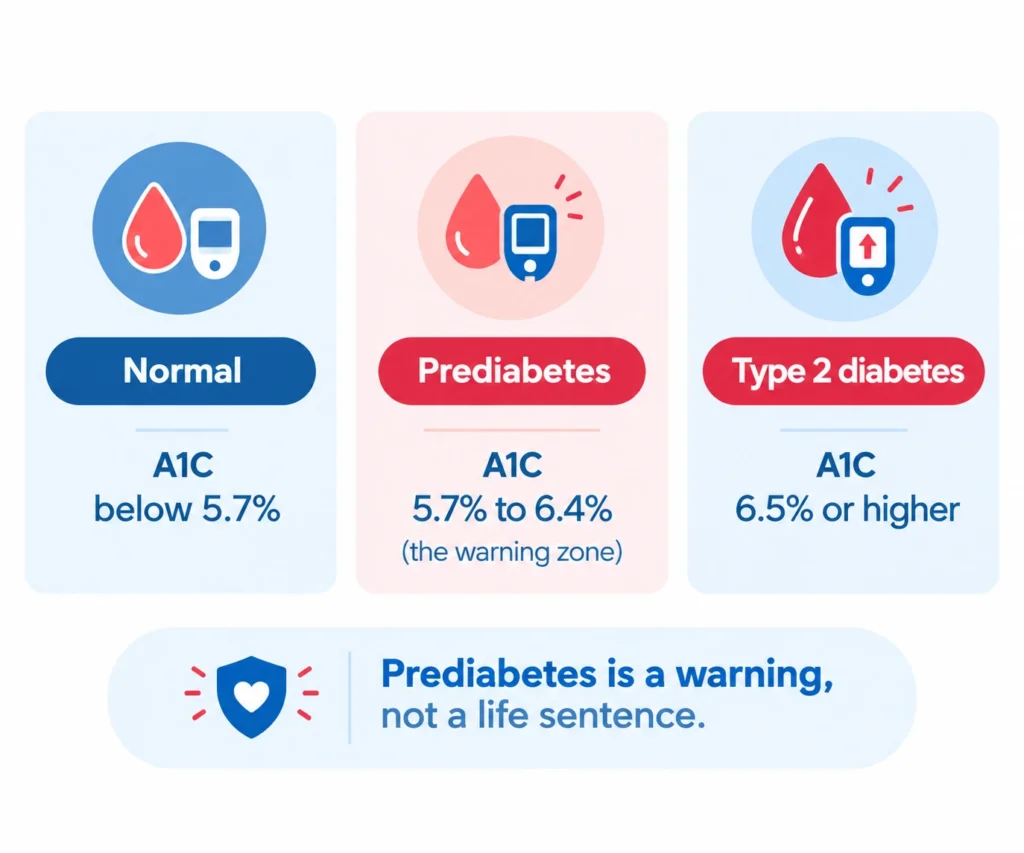
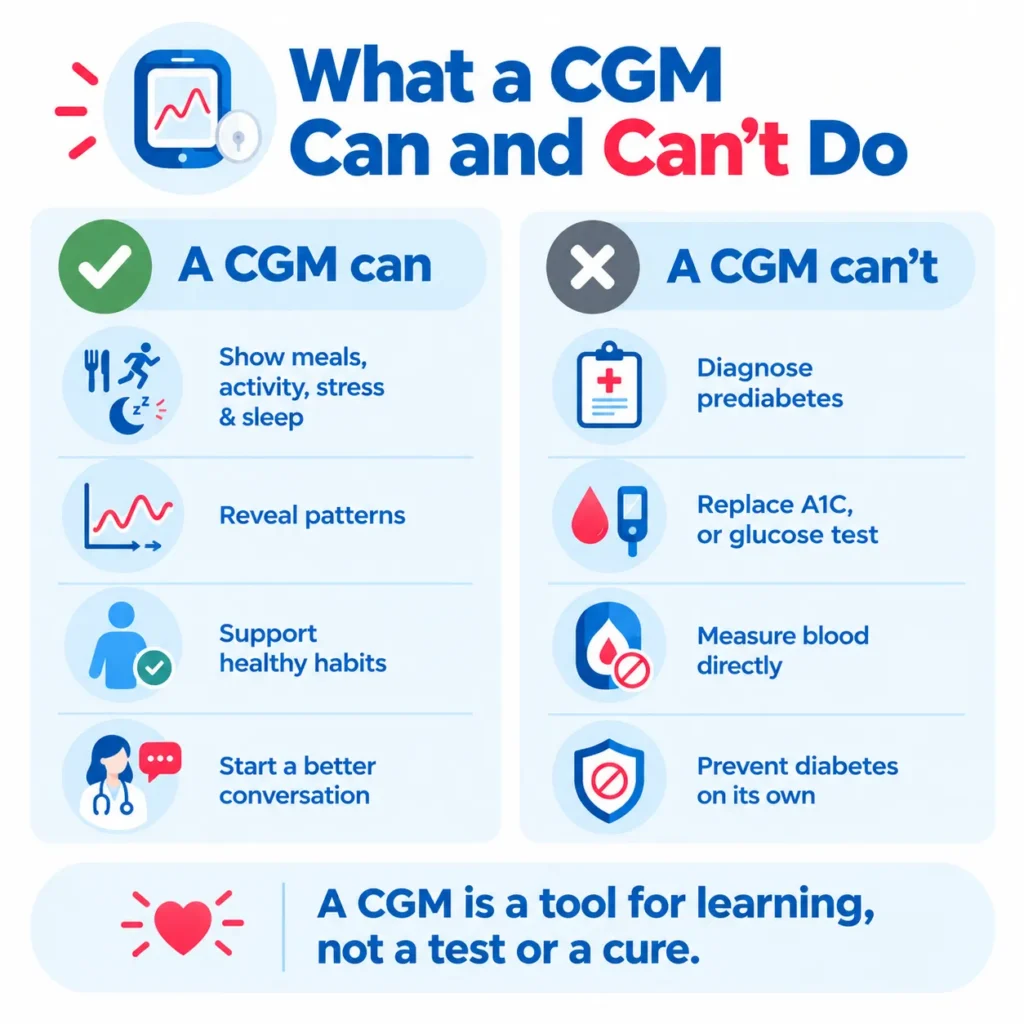
No. A CGM is not a validated diagnostic test for prediabetes. Doctors use blood tests to diagnose it. These are the three standard ones, with their usual US prediabetes ranges.
| Test | Prediabetes range |
| Hemoglobin A1C (HbA1c) | 5.7% to 6.4% |
| Fasting plasma glucose | 100 to 125 mg/dL |
| Two-hour oral glucose tolerance test | 140 to 199 mg/dL |
A CGM can add useful detail alongside these tests, but it can’t replace them. Ask your doctor which test fits you.
Understanding Postprandial Blood Sugar
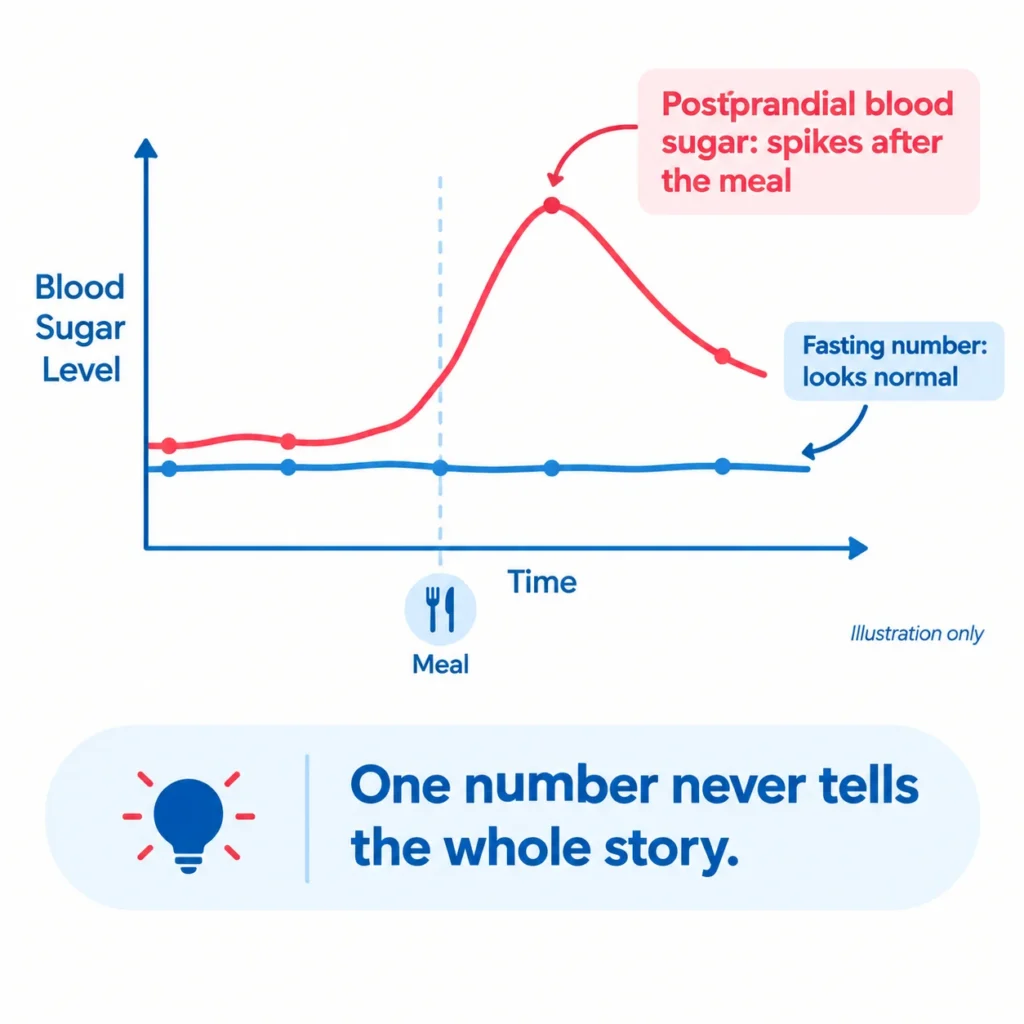
One term you’ll hear a lot is postprandial blood sugar. It just means your blood sugar after you eat. Everyone’s blood sugar rises after meals, and that’s normal. Doctors look at the pattern over time, along with fasting numbers and A1C.
A single spike doesn’t mean something is wrong, and it doesn’t prove insulin resistance. If you track your postprandial blood sugar, treat it as one clue, not a verdict.
How CGM for Prediabetes Changes the Game
This is where things get interesting. CGM for prediabetes means wearing a continuous glucose monitor, which shows how your blood sugar moves all day, not just one snapshot from a lab visit every few months. A small sensor on your arm does the tracking, and many show your numbers right on your phone.
It shows how your body reacts to meals, workouts, stress, and even sleep. Maybe your afternoon energy crash lines up with a lunch spike you never connected. Not everyone needs CGM for prediabetes, so ask your doctor if it fits you.
What Does a CGM Reading Actually Tell You?
A CGM doesn’t measure your blood sugar directly. It measures glucose in the fluid between your cells, so a reading can differ from a fingerstick or a lab test. Follow your device instructions, and ask your doctor when a reading doesn’t match how you feel.
One reading is a moment. A repeated pattern is a story. A single high number after pizza doesn’t mean much, but the same spike every day after a certain meal is worth noticing. Researchers also look at glucose variability, which means how much your glucose rises and falls over time. It’s an interesting area, but there are no universally accepted CGM targets for prediabetes. So don’t treat any one spike number or time in range percentage as a proven goal.
Does a CGM Prevent Type 2 Diabetes?
Here’s the honest answer: nobody knows yet. A 2025 review found that clinical trials haven’t shown that a CGM by itself prevents prediabetes from turning into type 2 diabetes, or brings glucose tolerance back to normal. A CGM may help some people understand their patterns and stick with lifestyle changes. But that’s a possible benefit, not a proven result.
The Link Between Prediabetes and Insulin Resistance
Prediabetes and insulin resistance usually go hand in hand. Insulin is the hormone that moves sugar out of your blood and into your cells for energy. When your cells stop responding to it well, sugar builds up in your blood instead. That’s what shows up on a prediabetes blood test.
The encouraging part is that insulin resistance isn’t always permanent. Steady lifestyle changes help many people improve how well their body responds to insulin, sometimes a lot. That’s a big reason early action matters so much.
CGM Insurance Coverage and Who Can Use a CGM
Some over the counter CGMs are now available to adults who meet the product’s intended use, including certain people without diabetes. Each product has its own rules, so read the label. And buying one doesn’t replace screening or a diagnosis from your doctor.
Cost is usually the first question. CGM insurance coverage depends on your plan, the product, your diagnosis, and the eligibility rules. Plenty of plans cover CGMs for type 1 or type 2 diabetes. For prediabetes, it’s hit or miss, and you may need prior authorization or a note from your doctor showing a medical need. Call your plan before you count on it.
What about CGM cost without insurance? It depends on the brand and how many sensors you need, since each one lasts only a week or two. Prices change, so check before you buy. Some people pay out of pocket for a short trial, just to see their own patterns. Knowing the CGM cost without insurance helps you decide if that’s worth it for you.
Building a Prediabetes Diet Plan That Works
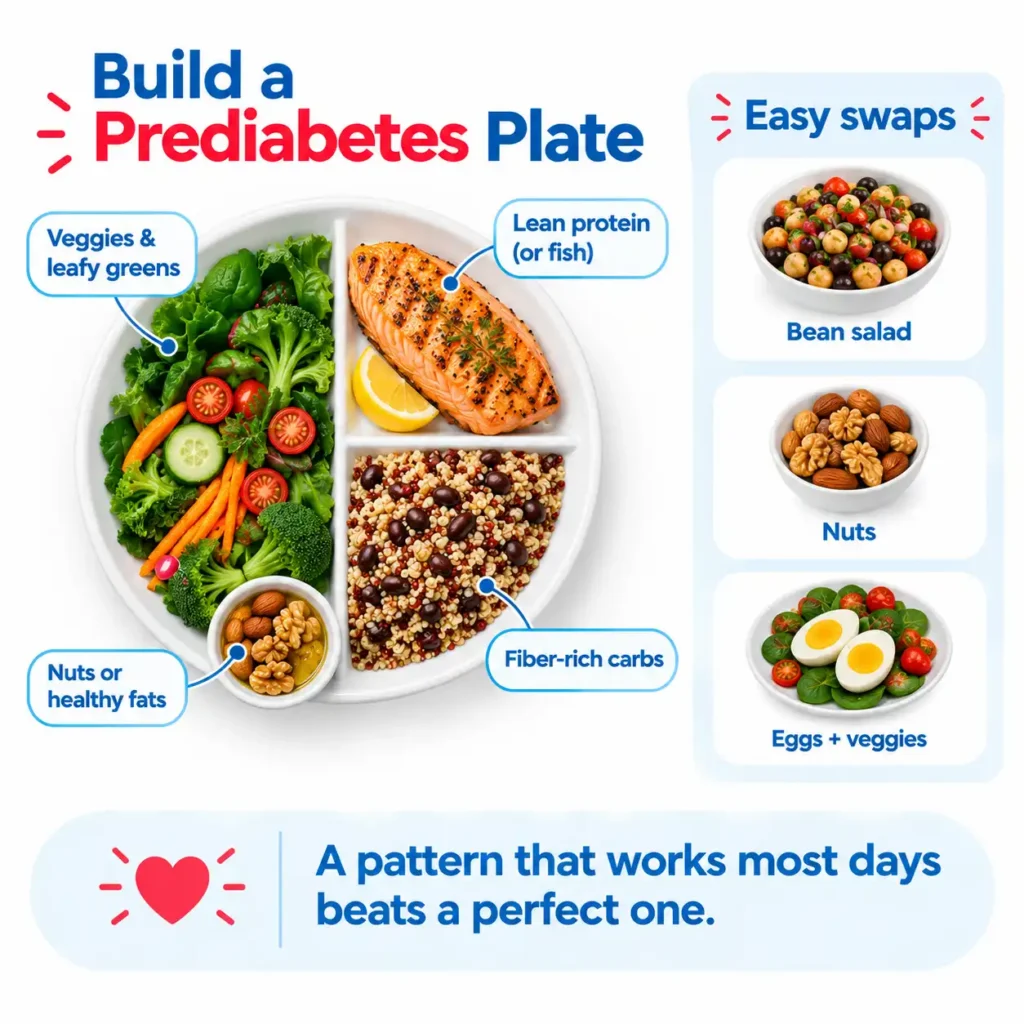
Your prediabetes diet plan doesn’t need to be strict or hard to follow. Keep it simple. Fill your plate with whole foods, lean protein, healthy fats, and fiber rich carbs. Go easy on sugar and packaged foods. Nothing is banned forever. What counts is a pattern that holds up most days, not a perfect one.
Food for prediabetes can be pretty ordinary. Leafy greens, beans, whole grains, nuts, and fatty fish all work well. Eat your carbs with some protein or healthy fat to keep blood sugar spikes smaller. Simple food for prediabetes doesn’t need to be fancy. A bean salad, a handful of nuts, or eggs with veggies all count.
Can You Reverse Prediabetes Naturally?
It’s the question people ask most, and the answer is good news. Plenty of people can reverse prediabetes naturally with steady changes to food, movement, sleep, and stress. Even losing a little weight often helps the body use insulin better.
But “naturally” doesn’t mean overnight. Real change takes months. The people who do best don’t chase quick fixes. They build habits they can actually keep, like a prediabetes diet plan they enjoy, regular walks, and better sleep. That’s what prediabetes prevention looks like day to day.
Using a Blood Sugar Tracking App
A blood sugar tracking app works alongside your CGM, or even instead of one, to show patterns over time. Many apps sync with CGM devices, so you can log meals, exercise, and sleep right next to your glucose readings.
That turns vague advice like eat better into something real. Your data shows which foods and habits work for your body and which ones don’t. A blood sugar tracking app makes it easier to spot what’s driving your numbers up or down.
The National Diabetes Prevention Program
For structured support, the national diabetes prevention program offers a research backed path if you have prediabetes. The CDC leads it. It usually means group sessions with a trained lifestyle coach on food, movement, and behavior change over about a year.
The results are worth knowing. In the research behind the program, people with prediabetes who made realistic changes lost 5% to 7% of their body weight and cut their risk of type 2 diabetes by 58%. For people over 60, the risk dropped by 71%. You can learn more and find a program on the CDC’s National Diabetes Prevention Program page.
Talking to a Primary Care Physician
Think you might be at risk? Already got bloodwork that points to prediabetes? Then it’s time to talk to a primary care physician McKinney patients already trust. Your doctor can order prediabetes screening, talk through whether a CGM makes sense for you, and build a plan that fits your real life.
It’s also a good time to look at the whole picture. That includes PCOS and prediabetes risk, family history, or anything else that might raise your odds. Acting early lowers your chance of a type 2 diabetes diagnosis later.
How Peoples Medical Care Helps With Early Prevention
Looking for a primary care physician McKinney residents can rely on? Peoples Medical Care doesn’t treat prevention as a one size fits all checklist. The team reviews your bloodwork, talks through whether CGM technology could give you useful insight, and builds a realistic plan around your lifestyle and health history.
That might mean exploring CGM options, adjusting your food choices, or connecting you with extra resources like the national diabetes prevention program.
Prediabetes Prevention: Your Next Move
At Peoples Medical Care in McKinney, prevention starts with understanding your blood sugar levels, health history, and risk factors. Your doctor can review your results, discuss lifestyle changes, and help you choose steps that make sense for you.
A CGM may offer extra insight into your glucose patterns, but it isn’t necessary for everyone with prediabetes. If you need more structure, the National Diabetes Prevention Program may also be an option. The goal is a prevention plan you can follow over time.
A normal A1C level is below 5.7%. An A1C between 5.7% and 6.4% indicates prediabetes, while a result of 6.5% or higher may indicate diabetes. Your doctor may repeat the test to confirm the diagnosis.
Prediabetes often has no noticeable symptoms. Some people may experience increased thirst, frequent urination, or darkened skin around the neck or armpits. Regular blood sugar testing can help identify prediabetes before symptoms appear.
CGM insurance coverage depends on your insurance plan, diagnosis, and device eligibility requirements. Some plans may not cover CGMs for prediabetes alone, so check your benefits before buying one.
If you have prediabetes, your doctor will usually recommend an A1C test at least once a year. Regular testing helps track your blood sugar levels and determine whether your prevention plan needs changes.
A CGM can help track glucose patterns and show how meals, exercise, and sleep affect blood sugar. This information may help guide healthier daily habits, but regular blood tests and medical advice remain important.
Taking the First Step
Prediabetes isn’t a life sentence, and you don’t have to figure it out alone. With awareness, steady habits, and modern tools like CGM technology, prediabetes prevention is within reach for you. The sooner you start paying attention, the more options you keep.
A primary care physician at McKinney families trust is a good place to begin. One conversation, one blood test, and a simple plan can change where things go from here.