Stress, anxiety, and depression can touch your mood, your sleep, your focus, and your whole day, but they aren’t the same thing. Stress usually starts with pressure or a tough situation. Anxiety is worry or fear that sticks around and can be hard to control. Depression can bring a low mood that lingers, a loss of interest, and changes in your energy.
These experiences can overlap, and a list of symptoms can’t confirm a diagnosis. Knowing how they differ can help you decide when to talk with a healthcare professional.
Key Takeaways
- Stress follows pressure and fades. Anxiety lingers. Depression lasts two weeks or more.
- Anxiety can cause a racing heart and sudden lightheadedness, but other problems can too.
- Small habits, like steady sleep and slow breathing, ease everyday stress.
- Therapy, medication, and daily habits often work best together.
- For chest pain or trouble breathing, get urgent care. If you think about suicide, call or text 988.
Understanding Stress, Anxiety and Depression
Stress, anxiety and depression can feel alike, but each one hits your mind and body in its own way. Knowing the difference helps you decide when to ask for help.
How Stress Affects Your Daily Life
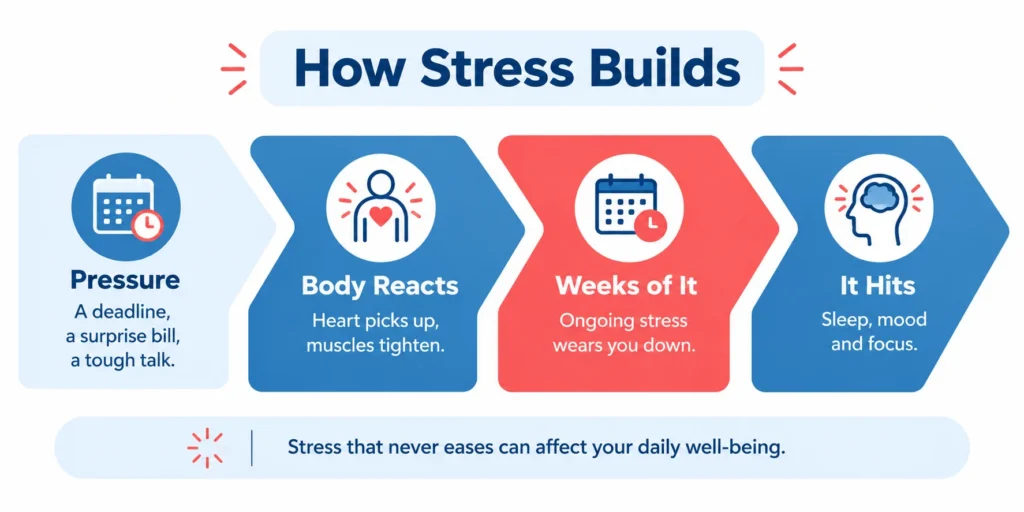
Stress is just your body reacting to pressure. Think of a tight deadline, a surprise bill, or a tough talk with someone. Your heart picks up and your muscles tighten. Keep that going for weeks, and it starts to hit your sleep, your mood, and your focus.
When Anxiety Becomes Difficult to Manage
Everybody worries sometimes. Anxiety is when the worry or fear sticks around, even though nothing urgent is going on. If it fills most of your days and gets in the way of life, a clinician may look at generalized anxiety disorder (GAD). That diagnosis has several criteria, and how long the symptoms last is one of them.
How Depression Affects Your Mood and Motivation
Depression is more than a bad week. Many people feel low most of the day, and things they used to enjoy just don’t feel worth the effort. If that goes on for two weeks or more, it’s worth getting checked. Time alone doesn’t prove a diagnosis, though. A clinician looks at several things before diagnosing major depressive disorder (MDD). And if symptoms feel severe, or you’re worried about your safety, don’t wait. Talk to a healthcare professional sooner.
Causes of Anxiety and Depression
Anxiety and depression rarely come from one thing. Usually, a few causes pile up and overlap.
Life Changes and Ongoing Stress
A job loss, a death in the family, money trouble, or a rough relationship can wear you down fast. Stress adds up, even when each problem looks small. The causes of anxiety and depression often start in plain, everyday life.
Biological, Psychological and Environmental Factors
Family history, brain chemistry, health problems that don’t go away, poor sleep, and some medicines can all play a part. So can the way you think about problems and the people around you. No single cause explains everyone’s story.
Trauma and Its Effects on Mental Health
Painful experiences can change how a person feels and reacts. Some people develop PTSD, short for post traumatic stress disorder. PTSD trauma symptoms can include flashbacks, nightmares, and constant tension, though not everyone who goes through trauma develops it. If something painful still affects your sleep or mood, talk with a professional.
Symptoms of Stress, Anxiety and Depression
Stress, anxiety and depression can share symptoms like poor sleep and low energy, but each one also has its own signs.
Emotional and Physical Signs of Stress
You might feel overwhelmed or short tempered, and you may get muscle tension, headaches, an upset stomach, or trouble sleeping. Focusing can feel harder too. These signs usually fade once the pressure eases.
Common Symptoms of Anxiety
Anxiety often brings constant worry, restlessness, a racing heart, and trouble sleeping. Some people also notice sudden lightheadedness when the worry peaks. Heart, thyroid, and other medical problems can cause similar symptoms, so tell a clinician about them. The National Institute of Mental Health has an overview of anxiety disorders.
What Are Some Symptoms of Depression?
Depression looks different for everyone, but these signs are common:
- A low or empty mood most of the day
- Loss of interest in things you used to enjoy
- Fatigue and low energy
- Changes in sleep or appetite
- Trouble concentrating, or feeling worthless
If several of these last most of the day for two weeks or more, ask a clinician for an assessment. The National Institute of Mental Health has an overview of major depression.
Difference Between Stress, Anxiety and Depression
The difference between stress, anxiety and depression comes down to trigger, timing, and how each one affects your life.
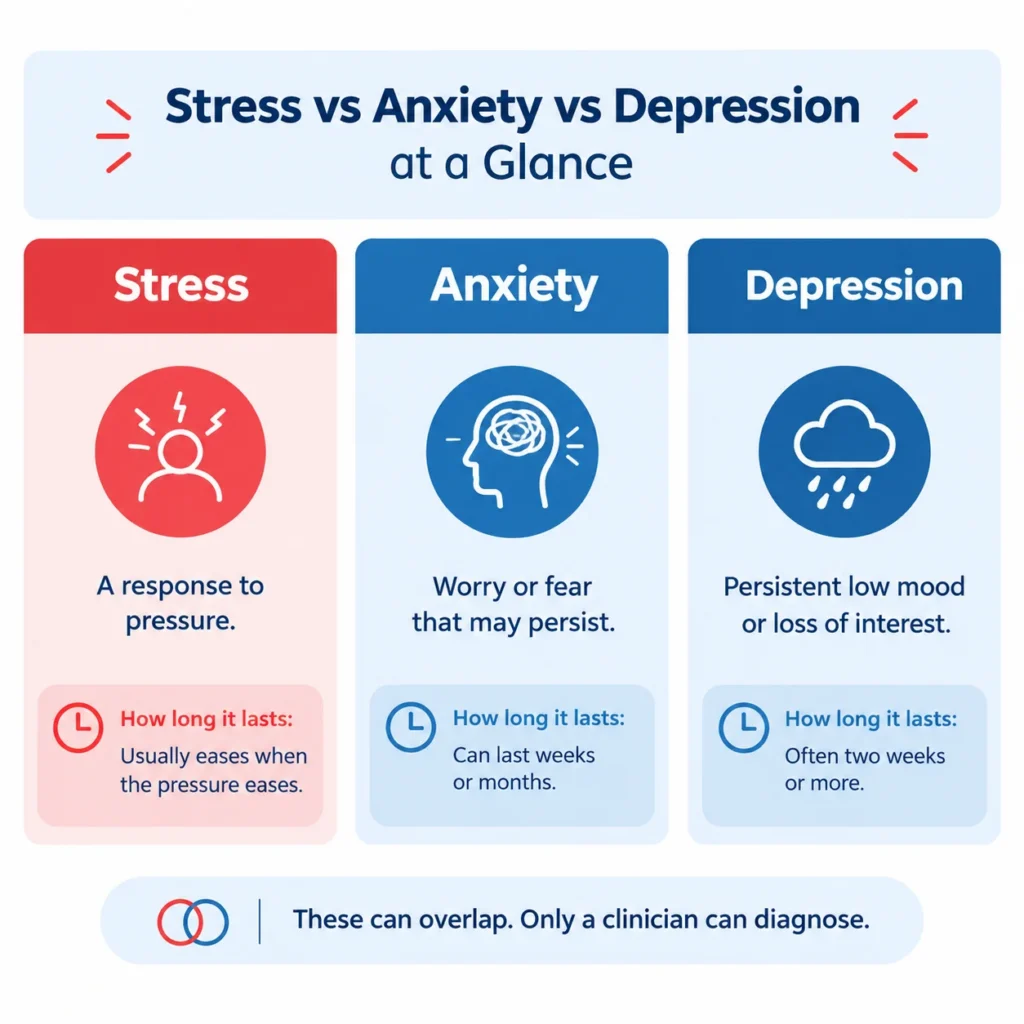
| Feature | Stress | Anxiety | Depression |
| Typical trigger | A clear outside pressure | Worry, often without a clear cause | A loss, or no obvious reason |
| Typical pattern | Response to pressure | Worry or fear that may persist | Persistent low mood or loss of interest |
| How long it lasts | Usually eases when the pressure eases | Can last weeks or months | Often two weeks or more |
| Support options | Coping strategies and addressing stressors | Coping strategies and professional care | Support and appropriate treatment |
These experiences overlap, and a person can have more than one. This table is for general education and can’t diagnose.
Symptoms of a Panic Attack vs. an Anxiety Attack
A panic attack hits suddenly and peaks within minutes, while anxiety usually builds more slowly over hours or days.
Common Symptoms of a Panic Attack
A panic attack hits with sudden, intense fear that often peaks within minutes. You may notice a racing heart, sweating, dizziness, and chest discomfort. Chest discomfort can also point to a heart problem, so don’t assume it’s panic.
How Anxiety Symptoms Can Develop Over Time
Anxiety usually builds slowly. “Anxiety attack” is a common phrase, not a formal diagnosis. The symptoms panic attack vs anxiety attack differ mainly in speed. New or severe chest pain and trouble breathing need urgent medical care. Call 911 or go to the nearest emergency room.
Effects of Anxiety on the Body
Anxiety can reach beyond your thoughts. It can cause a racing heart, muscle tension, sweating, and dizziness, though other medical conditions can cause these symptoms too.
Understanding the Fight or Flight Response
The effects of anxiety on the body start with the fight or flight response. Your brain senses danger and releases stress hormones that speed up your heart and tighten your muscles. If your stress response stays on for long stretches, it may affect your sleep, mood, and physical wellbeing.
Physical Symptoms Such as Sudden Lightheadedness
Anxiety can cause dizziness or sudden lightheadedness, especially during a spell of worry. Heart, thyroid, and other medical problems can cause them too, so these symptoms don’t prove anxiety is the cause.
When Physical Symptoms Need Urgent Attention
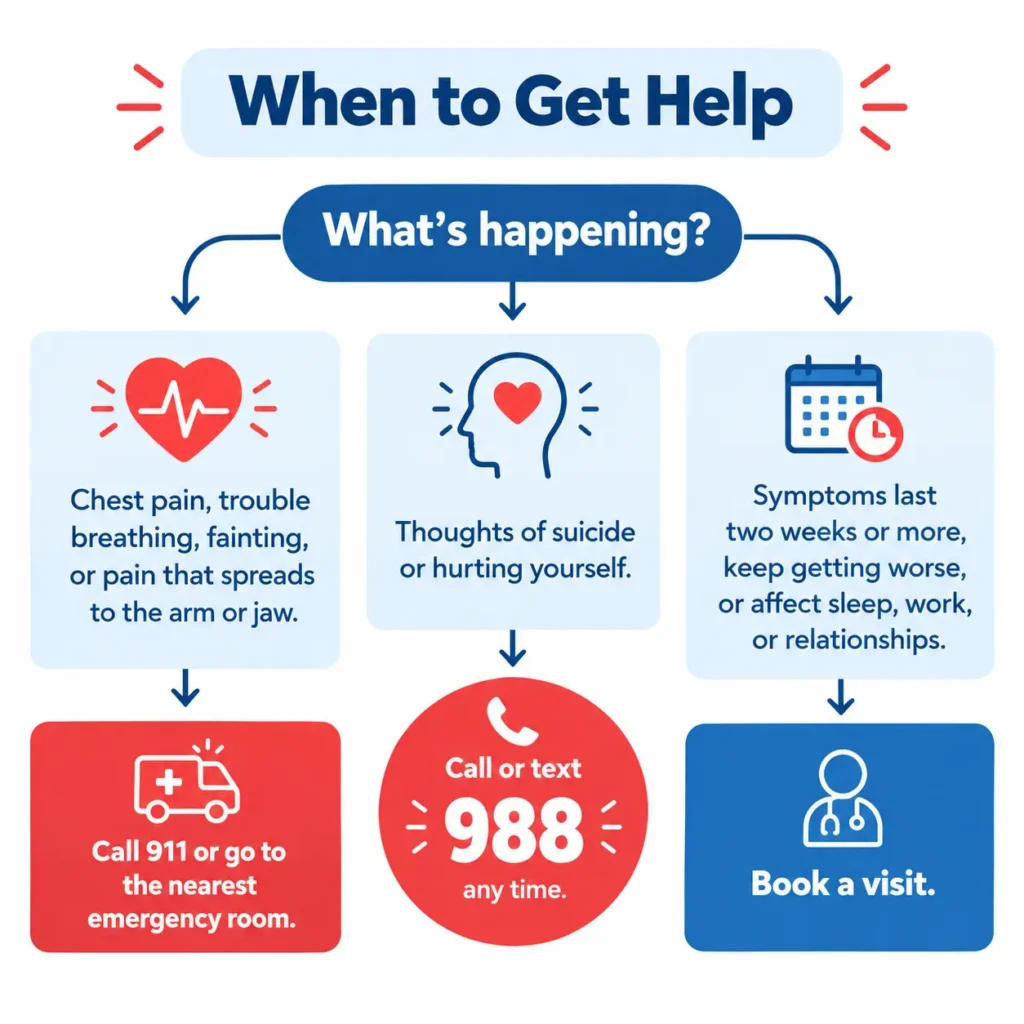
Get urgent medical care for chest pain, trouble breathing, fainting, or pain that spreads to your arm or jaw. Do the same for any symptom that feels sudden, severe, or new. Don’t assume anxiety explains it.
How Clinicians Diagnose Mental Health Conditions
Only a qualified clinician can diagnose a mental health condition. The process starts with a conversation about your symptoms, how long you’ve had them, and how they affect your life.
What to Expect During a Mental Health Evaluation
Expect questions about your mood, sleep, stress, and medical history. The clinician may also check your physical health, including your weight and the body mass index (BMI), because medical conditions can affect mood.
How Clinicians Use Diagnostic Guidelines
Clinicians use the Diagnostic and Statistical Manual of Mental Disorders (DSM) to guide diagnoses of conditions like MDD, GAD, and PTSD. Only a qualified professional can apply it, so don’t use it to diagnose yourself.
Stress Management Tips for Everyday Life
These stress management tips stay small on purpose, so you can keep them going on a busy week. Pick one or two and try them for a week:
- Keep a steady sleep schedule. Most adults need seven or more hours, according to the CDC.
- Pick your top three tasks each morning.
- When tension spikes, breathe in for four counts and out for six, five times.
- Move your body in a way that suits you, since physical activity may support mood, stress, and sleep.
- Talk to someone you trust, such as a friend, a family member, or a doctor.
That’s how to manage stress and anxiety without overhauling your life. Self care doesn’t replace treatment, and overcoming anxiety and depression rarely comes down to willpower alone.
Treatment Options for Anxiety and Depression
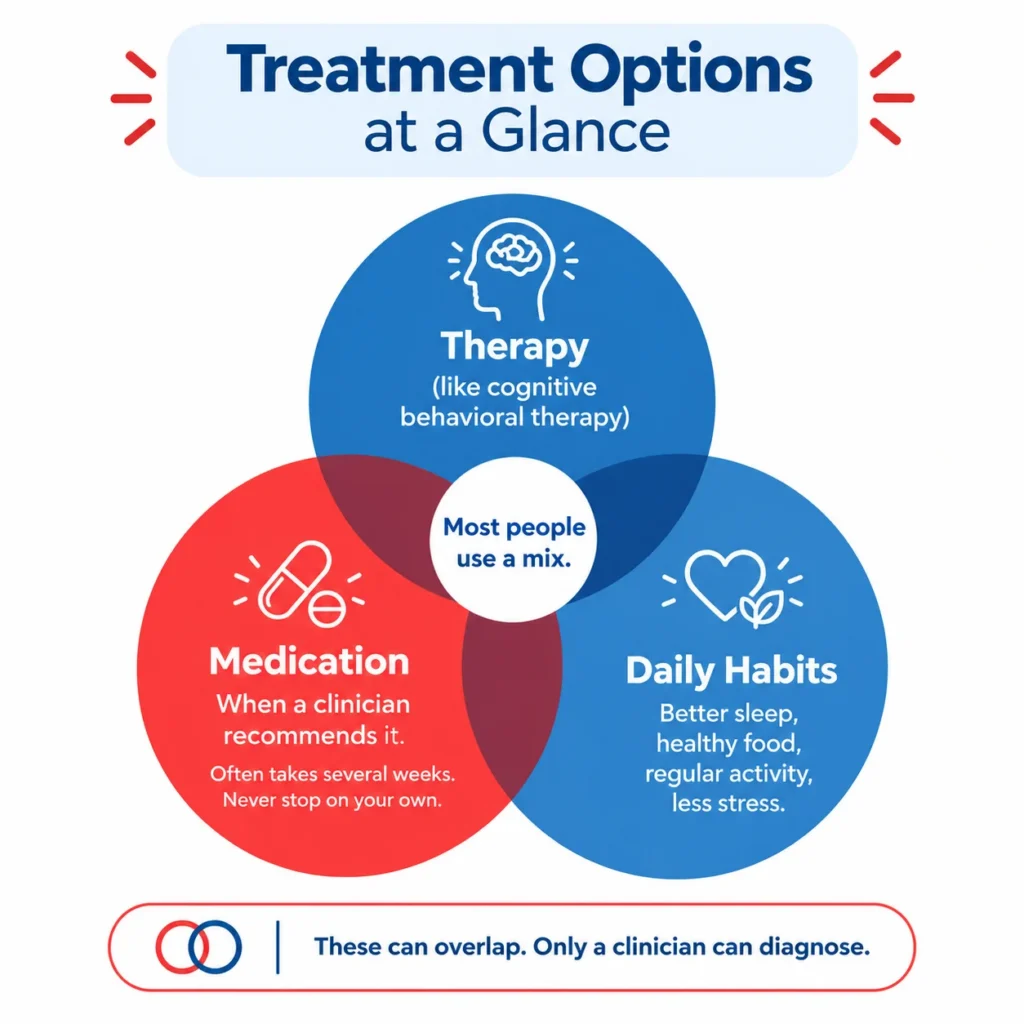
If anxiety or depression is getting in the way of daily life, treatment can help. Most people use a mix of therapy, medication when a clinician recommends it, and daily habits.
How Therapy Can Help
Cognitive behavioral therapy (CBT) helps you notice unhelpful thought patterns and answer them differently. You practice new skills in sessions and use them in daily life. Many people start with weekly sessions.
When Medication May Be Appropriate
A qualified clinician can talk with you about the benefits and side effects of medication. Medicines like SSRIs and SNRIs often take several weeks to work. Never stop a medicine on your own.
When More Intensive Care May Be Needed
Inpatient treatment for anxiety and depression means staying in a hospital or treatment facility for a higher level of support. It may fit when symptoms are severe or safety is a concern, though most people never need it.
When to See a Doctor for Anxiety or Depression
Everyone has hard weeks, so it can be tough to know when to get help. See a doctor if your worry or low mood lasts for weeks, gets worse, or starts to mess with your sleep, work, or relationships.
Signs That Anxiety Needs Professional Attention
Think about booking a visit if your worry keeps getting worse or gets in the way of your sleep, work, or relationships. Having panic attacks a lot, or avoiding places and people because you’re scared, are good reasons too. The sooner you ask for help, the easier treatment often is.
When to See a Doctor for Depression
Book a visit if you feel low or lose interest in things for two weeks or more. Also book one if it starts to affect your sleep, appetite, work, or relationships. If you ever think about suicide or hurting yourself, call or text 988, the Suicide and Crisis Lifeline, any time. Call 911 in an emergency.
Expert Review and Guidance
Before your visit, note down how you’ve slept, how your mood has shifted, and when worry hits hardest. Bring those notes with you. When we have real details to work with, we can spot patterns faster and plan your next step together.
Stress responds to pressure and usually fades. Anxiety is worry that lingers, and depression is a lasting low mood or loss of interest. A clinician can help you sort out which fits.
A panic attack brings sudden, intense fear, a racing heart, and sweating, and it often peaks within minutes. Seek urgent care if chest pain is new or severe.
Yes, it can. Other medical conditions can cause the same symptom, so ask a clinician to check, especially if it’s new or severe.
Seek help if symptoms last two weeks or more, get worse, or disrupt daily life. If you have thoughts of self harm, call or text 988.
A panic attack hits suddenly with intense fear and a racing heart, and it often peaks within minutes. Anxiety builds slowly over hours or days. “Anxiety attack” isn’t a formal diagnosis. Seek urgent care for new or severe chest pain.
Ask for Help Early
Stress, anxiety and depression are common, and they’re treatable. Learn the differences, notice what changes, and ask for help early. If you’d like to talk with a clinician at People’s Medical Care in McKinney, Texas, request an appointment. Bring your medicines list, a few notes about your symptoms, and your questions.