Healthcare does not change overnight. It changes the way most things change, slowly enough that you barely notice until one day you realize your doctor’s office looks like it did five years ago. A video visit instead of a waiting room. A device on your wrist quietly tracking your heart rate. A care team that reaches out before you even know something is wrong.
The future of healthcare is already showing up in everyday primary care visits right here in North McKinney, and understanding what is changing helps you use these tools rather than feel left behind by them.
Key takeaway:
- Healthcare is shifting from occasional visits to ongoing, connected care
- Remote monitoring lets doctors catch problems early, before they become hospital visits
- Video visits handle follow ups and minor issues without the trip
- Population health tools flag risk patterns before complications develop
- Seniors stay safer at home with continuous monitoring
- Technology helps a limited workforce care for more patients
Primary Care McKinney TX Is Looking Different Than It Did a Few Years Ago
If you have not been to your primary care doctor in a while, the experience waiting for you now is genuinely different. Primary care McKinney TX has shifted from a model built entirely around in person visits to one that blends technology, data, and personal relationships in a way that actually serves patients better.
This is not about replacing your doctor with an app. It is about giving your doctor more information, more often, so the care you receive is based on your real patterns rather than a single snapshot taken once a year during your physical condition.
Remote Patient Monitoring Technology: The Quiet Shift Nobody Talks About Enough
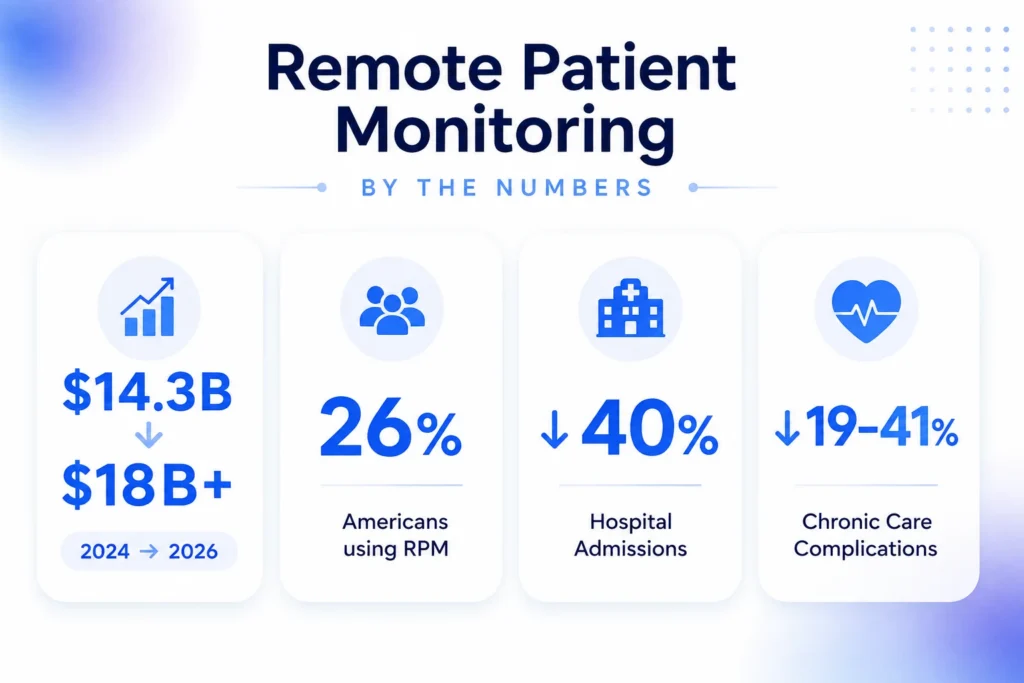
Remote patient monitoring technology has moved from a niche pilot program to a standard part of outpatient care faster than almost anyone expected. The U.S. remote patient monitoring market was valued at roughly 14.3 billion dollars in 2024 and is projected to exceed 18 billion dollars by 2026. An estimated 71 million Americans, about 26 percent of the population, are expected to use some form of RPM.
What does that actually mean to you. It means a device tracking your blood pressure, your blood sugar, or your heart rhythm at home can send that data directly to your care team without you needing to remember to mention it at your next appointment. Across surveyed organizations, hospital admissions for chronic care complications dropped between 19 and 41 percent thanks to remote monitoring. Older patients using remote monitoring have seen a 40 percent reduction in hospital admissions.
For anyone managing diabetes, hypertension, or heart condition, this is not a futuristic concept. It is happening in primary care offices right now, including here in McKinney.
Video Doctor Visit Near Me: When a Screen Is Actually Better Than a Waiting Room
There was a time when telehealth felt like a compromise, something you settled for because an in-person visit was not available. That has changed significantly. Seventy-five percent of doctors report that virtual care has made their work more efficient.
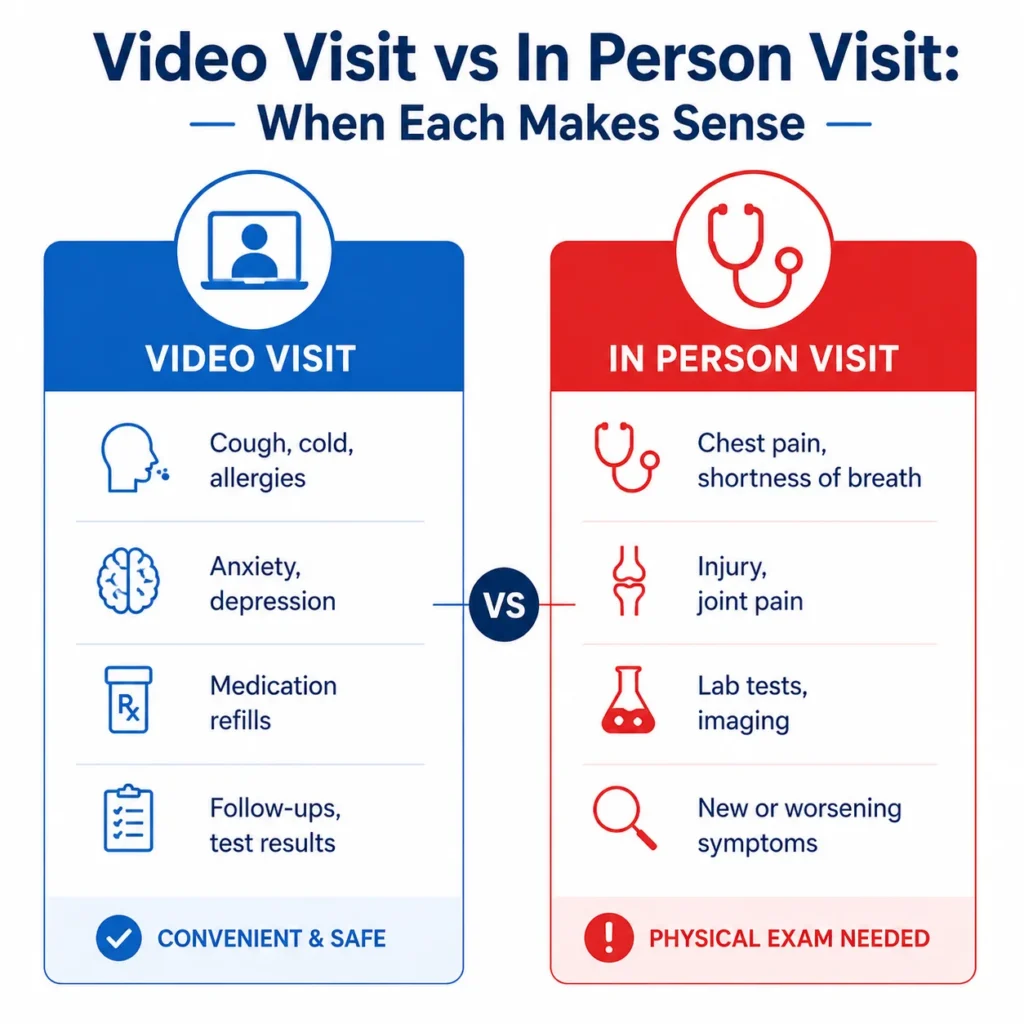
A video doctor visit near me search used to return a handful of generic options. Now it often connects you to your own primary care provider, the same person who knows your history, sitting in front of a screen rather than across an exam room. For a medication question, a follow up on lab results, or a minor symptom that does not require a physical exam; this saves a trip, saves time, and gets you an answer the same day.
Telehealth today covers more than video calls. It includes real time visits, asynchronous messaging where you send photos or questions for later review, virtual check ins, and remote monitoring all working together. The goal is not to replace in person care entirely. It is to make sure the right kind of visit happens for the right kind of need.
Healthcare Innovation Is Becoming Less About Hospitals and More About Everyday Care
When people hear healthcare innovation, they often picture a hospital with new equipment or a research lab developing a breakthrough treatment. The bigger shift is happening somewhere quieter, inside the everyday relationship between patients and their primary care providers.
Remote patient monitoring now allows physicians to track vital signs like blood pressure, glucose levels, and oxygen saturation in real time, leading to more tailored care plans and empowering patients to take meaningful steps in their own preventive care.
That shift from reactive medicine to proactive, personalized monitoring is the real innovation story, even if it does not make headlines the way a new surgical robot does.
Population Health Management: Seeing the Bigger Picture Before It Becomes a Problem
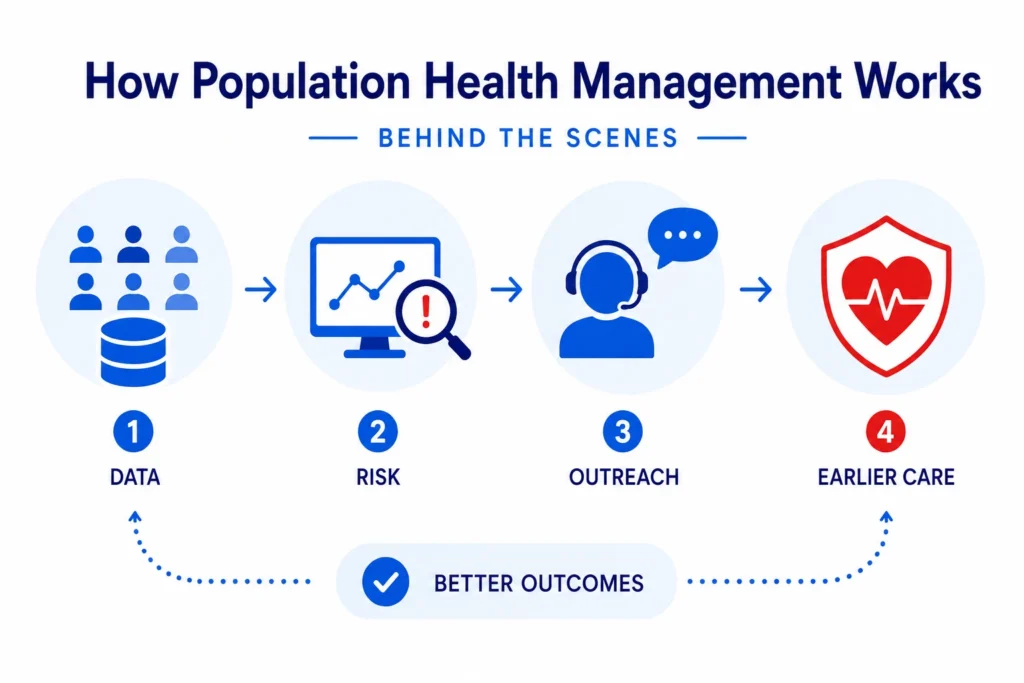
Population health management sounds like something built for hospital administrators, not individual patients. But what it actually does is use data across many patients to identify patterns that help your specific care improve.
If a clinic notices that patients with a certain combination of risk factors tend to develop complications within a predictable window, that insight gets used to reach out earlier to anyone fitting that pattern. It is the difference between waiting for a problem to show up and catching the warning signs while there is still time to act. For chronic conditions especially, this kind of proactive outreach changes outcomes in ways a single annual checkup never could.
Healthcare Technology Trends Worth Actually Paying Attention To
A lot of healthcare technology trends sound impressive but do not change much for the average patient. A few genuinely do.
Predictive analytics built into monitoring devices are starting to spot patterns before symptoms even appear, alerting care teams early rather than after something has already gone wrong. Device data is increasingly flowing directly into electronic health records and population health systems, meaning your information moves seamlessly between your devices and your care team rather than sitting disconnected in different places.
Artificial intelligence is also playing a growing role, mostly behind the scenes. It helps doctors document visits faster, flags lab results that need attention, and reduces the administrative burden that used to eat into actual patient care time. The point of all of this technology is not to make healthcare feel more digital. It is to make healthcare feel more personal by giving your doctor more time and better information.
The Evolving Healthcare System and What It Means for How You Get Care
The evolving healthcare system is moving toward a model where care follows you rather than the other way around. Instead of healthcare happening only inside a building, more of it is happening at home, on your phone, and through devices that quietly do their job in the background.
This shift benefits patients managing chronic conditions the most, since consistent monitoring catches problems between visits rather than only during them. It also benefits people with busy schedules, limited mobility, or transportation challenges, since a video visit removes barriers that used to keep people from getting care altogether.
Care at Home for Seniors: A Shift That Matters More Every Year
Care at home for seniors has become one of the most meaningful applications of all this new technology. Many older adults strongly prefer staying in their own homes rather than moving into assisted living, and remote monitoring combined with regular telehealth check ins makes that genuinely safer than it used to be.
A device tracking heart rhythm, blood pressure, or oxygen levels can alert a care team to a problem before it becomes a hospital visit. For families managing care for an aging parent from a distance, this kind of monitoring also provides real peace of mind. It does not replace in person care entirely, but it closes the gap between visits in a way that matters enormously for older adults managing multiple conditions at once.
Healthcare Workforce Shortage: Why Innovation Is Not Optional Anymore
None of this technology exists in a vacuum. Part of why remote monitoring, telehealth, and population health tools have grown so quickly is because the healthcare workforce shortage has made traditional models harder to sustain.
There are simply not enough physicians and nurses to meet growing demand in the old-fashioned way, with every interaction requiring an in-person visit. Healthcare workforce solutions increasingly rely on technology to extend what a smaller team can manage effectively. A primary care provider using remote monitoring and telehealth can keep closer tabs on more patients than one relying solely on scheduled office visits. This is not a replacement for human care. It is a way of making sure human care reaches more people despite a workforce that is stretched thinner than it used to be.
Remote patient monitoring uses home devices to track blood pressure, blood sugar, or heart rhythm and send that data straight to your care team. Instead of waiting for your next appointment, doctors catch patterns as they build, which cuts hospital admissions and complications for chronic conditions.
Video visits work well for medication questions, follow ups, minor symptoms, and lab discussions, and most doctors say it makes their work more efficient. Physical exams or new symptoms needing hands on evaluation still need an in-person visit. It’s about matching the visit type to the actual need.
Population health management looks at data across many patients to spot risk patterns early. If your profile matches a pattern tied to future complications, your care team can reach out before a problem shows up, making healthcare proactive instead of reactive.
Seniors strongly prefer staying home, and remote monitoring plus telehealth makes that safer than before. Device tracking vitals can flag a developing issue before it turns into a hospital visit, giving families peace of mind without a move to assisted living.
There aren’t enough physicians and nurses to meet demand through in-person visits alone. Technology like remote monitoring and telehealth helps smaller teams manage more patients without sacrificing quality of care.
What This Actually Looks Like at Peoples Medical Care McKinney
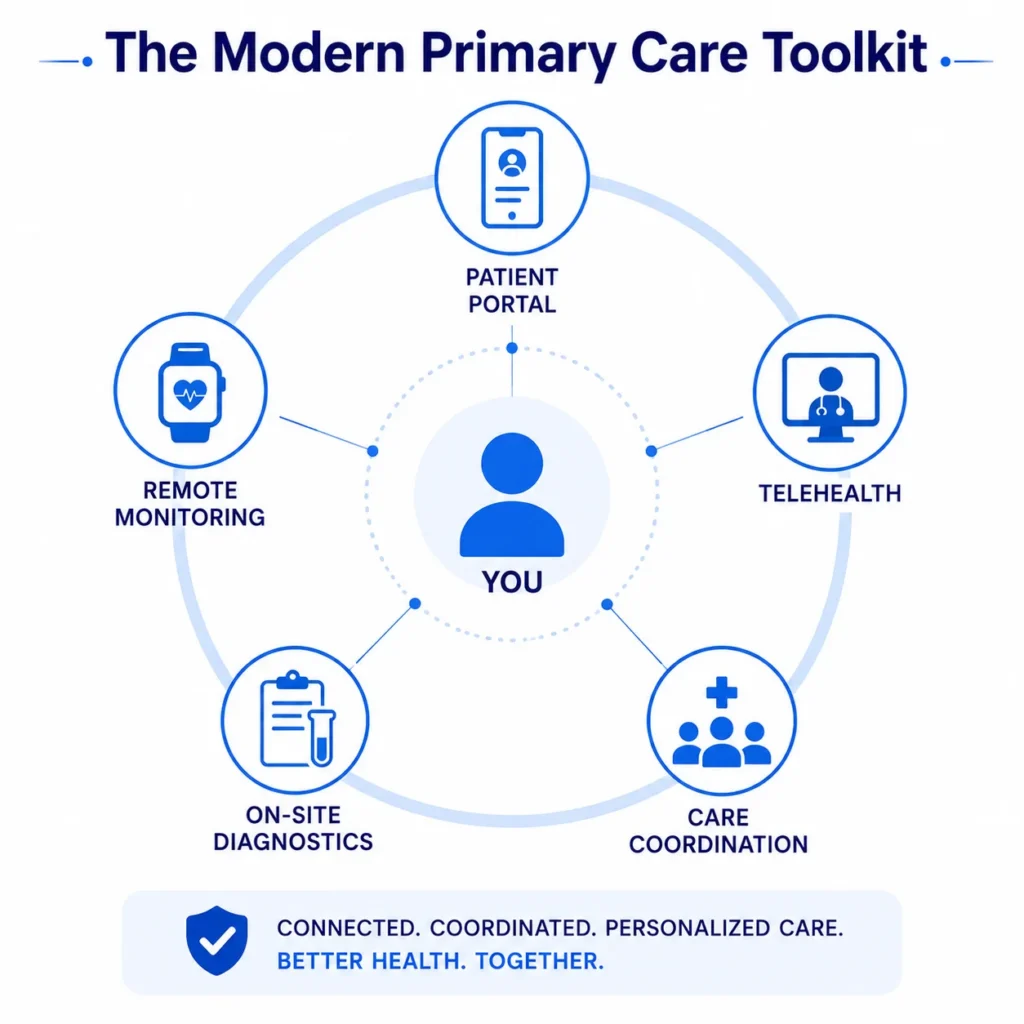
Peoples Medical Care McKinney has built its approach around this shift. Dr. Zulfarah Ishaque and Dr. Munaza Gohar combine traditional primary care with the tools that make modern healthcare more responsive, including a patient portal for direct communication, on site diagnostics for faster answers, and coordinated specialist referrals through the clinic’s affiliation with Southwestern Health Resources.
The future of healthcare is not about replacing the relationship between you and your doctor. It is about giving that relationship better tools to work with.