Most people pick a doctor the same way. You search near me, you check if they take your insurance, and you book the first appointment that has an opening. Nobody really thinks about what network that doctor belongs to or what that connection actually does for the quality of care they receive down the line.
But here is the thing. It matters a lot more than most people realize. And if your primary care provider is part of Southwestern Health Resources, that affiliation is quietly doing a significant amount of work on your behalf every single day.
This is for anyone who wants to understand what that looks like in real life, not in a brochure.
Key takeaway:
- Your network affects your care quality more than you think.
- Connected records mean coordinated, faster specialist care.
- Population health tools catch problems before they escalate.
- ACO model rewards keeping you healthy, not more billing.
- Peoples Medical Care McKinney runs inside this network.
What Are Southwestern Health Resources and Why Does It Actually Matter
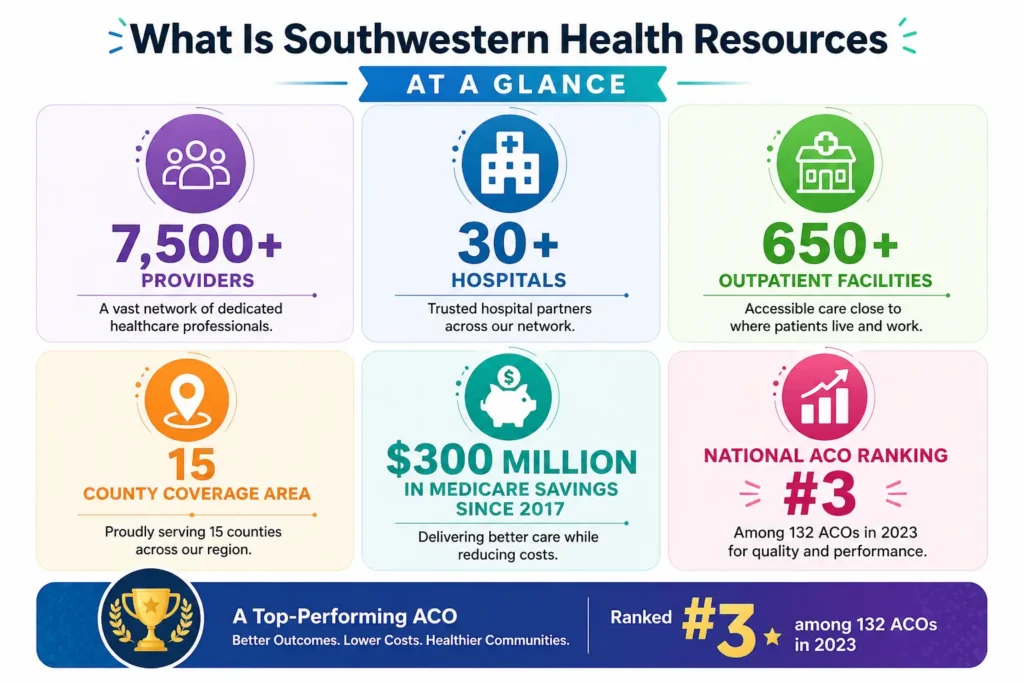
Most people know it simply as SWHR, but Southwestern Health Resources is the largest integrated health network in North Texas. UT Southwestern Medical Center and Texas Health Resources built it together, and both names carry serious weight in healthcare across this region. Together they put together a clinically integrated network that now includes more than 7,500 physicians and providers, more than 30 hospitals, and more than 650 outpatient facilities stretched across 15 counties in North Texas.
Those numbers are not just impressive on paper. They represent something very specific to patients. When your primary care doctor is inside this network, they are not a solo provider trying to piece together your care from whatever information happens to be available. Your doctors plug into a system that shares records, coordinates treatment, tracks health trends over time, and focuses on keeping you well instead of waiting until something goes wrong to react.
That is a different kind of healthcare than what most people have experienced.
Why Primary Care Is Important Inside a Network Like This
A lot of people think of their primary care doctor as the person they see once a year for a physical or call when they have a sinus infection that will not quit. But why primary care is important goes so much deeper than that, especially when your doctor is part of an integrated health network.
Think of your primary care provider as the person who holds the whole story of your health. They know what your blood pressure was doing three years ago, know which medications you have tried, and which ones did not work. They know the family history you mentioned once in passing that ended up being relevant later. Inside SWHR, that story does not just live in one chart in one office. It connects across the entire network.
So, when you need a specialist, it is not just a referral on a piece of paper. Your records move with you. The specialist already knows your background before you walk in. The conversation between your primary care doctor and that specialist actually happens rather than falling through the cracks. Your doctors belong to a system that shares records, coordinates treatment, and tracks your health trends over time. The whole setup genuinely aims to keep you well instead of waiting until something goes wrong to react.
What Is Population Health Management and What Does It Actually Do for You
Population of health management sounds like something that belongs to a hospital boardroom conversation. But what it actually translates for individual patients is one of the most practically useful things about being in this network.
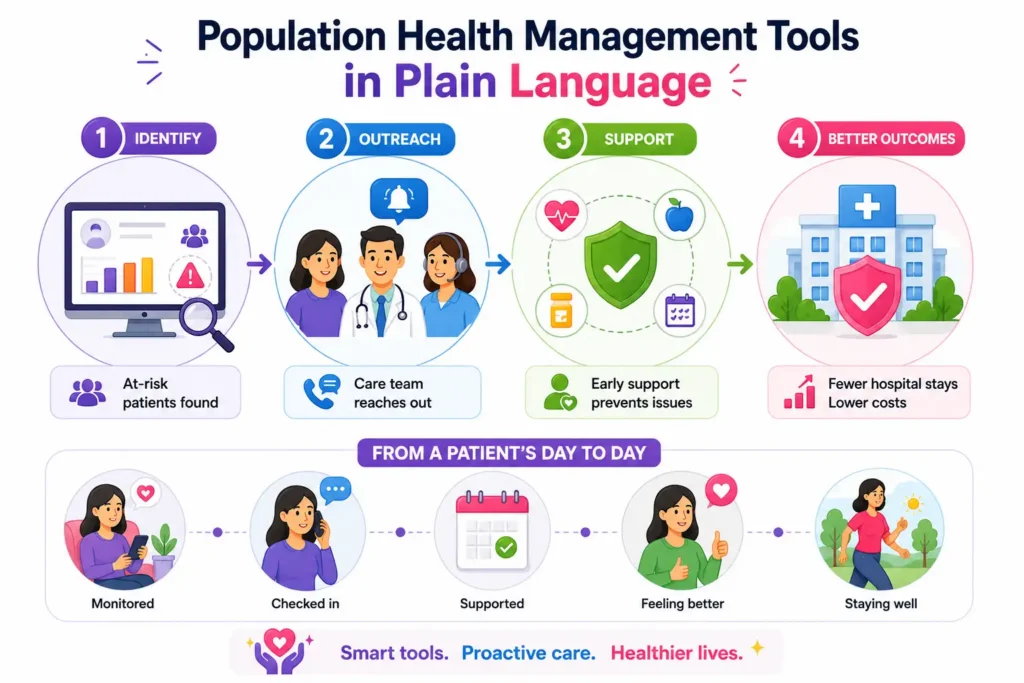
Here is the plain version. SWHR uses real data and technology to look for patterns across thousands of patients and identify people who may be heading toward a serious health event before that event happens. Not after the crisis lands you in the emergency room on a Tuesday night. Before. Predictive tools flag patients whose numbers or health history suggest something is shifting in a direction that warrants attention.
When that flag goes up, someone reaches out. A phone call. A follow up appointment. A review of medications that have not been checked in a while. An intervention that takes thirty minutes and prevents something that could have meant a week in the hospital.
In pilot studies, this approach brought unplanned hospital visits down from around 34 percent to just 8 percent among participants. That is not a minor tweak. That is a completely different outcome for real people who would otherwise have spent days in a hospital bed wondering how things got this bad so fast.
How Does an ACO Work and What Does That Mean for Your Bills
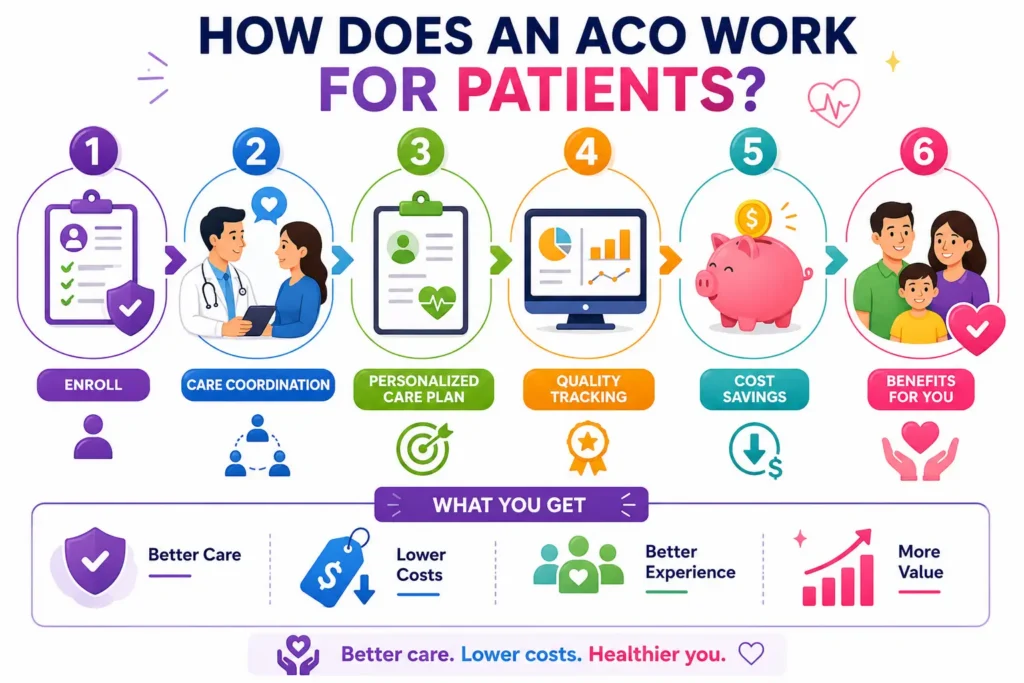
How does an ACO work is a fair question and it is worth understanding because it directly affects your experience and your costs as a patient.
An Accountable Care Organization pulls together doctors, hospitals, and other providers who take responsibility for both the quality and cost of the care they deliver. Instead of rewarding providers for billing more services, the ACO model rewards them for keeping patients healthy, and that shift changes the math for everyone involved.
SWHR operates as an ACO for Medicare and Medicare Advantage patients. Since the program launched in 2017, SWHR has generated more than 300 million dollars in Medicare savings. That is one of the strongest records of any ACO anywhere in the country and it ranked third among 132 ACOs under the federal ACO REACH model in 2023. For patients, that performance translates into better coverage, lower costs, and care quality that someone actually measures instead of just assuming it is good.
For patients outside Medicare, the same philosophy applies. Preventive wellness care comes first. Keeping you out of the hospital is the actual goal, not filling a schedule with visits that do not move your health forward.
Patient Portal Benefits: The Tool That Most People Ignore Until They Actually Use It
Your patient portal is one of the most underused things in modern healthcare and genuinely one of the most useful when people start engaging with it properly.
Patient portal benefits inside the SWHR network go well beyond checking a lab result online. Your full health record is visible and shared across providers within the network. When you go see a specialist your primary care doctor has not met; that specialist is already looking at the same records your doctor sees. Notes, labs, imaging, medications, referrals. All of it in one place updated in real time rather than faxed over from a different office three days after your appointment.
You can message your care team without playing phone tag. From your phone you can request a prescription refill, review what your doctor discussed at your last visit, and check what appointments are coming up. For anyone managing a chronic condition or seeing more than one provider at a time, the portal becomes something you rely on between appointments rather than just a place to check in once a year.
If you have not set yours up yet, asking your clinic for help takes about five minutes. That five minutes changes how connected you feel to what is happening with your own health.
Preventive Wellness Care: The Real Foundation of This Model
Everything SWHR does is built around one idea. Catching a problem early cost less, causes less suffering, and leads to better outcomes than waiting until something becomes serious enough that you have no choice but to deal with it.
Preventive wellness care inside this network means your doctor is not just responding to what you bring to them. They are actively tracking what the data says about your risk profile, reaching out when something looks like it needs attention, and building a care plan that looks ahead rather than just today.
Annual wellness visits, routine screenings, medication reviews, and coordination between your providers all work together to build a picture of your health over time. That picture becomes one of the most valuable things you have when something shifts, and your doctor needs to understand whether it is new or part of a pattern that has been building quietly for a while.
Hospital Readmission Prevention: Why Not Going Back Matters as Much as Getting Better
One of the clearest signs that a healthcare system is actually working is how often patients end up back in the hospital shortly after being discharged. Hospital readmission prevention is one of the places where the SWHR model shows its results most clearly.
When you leave a hospital inside this network, the follow-up does not stop at the exit. Care coordinators check in.Your medications get reviewed before you walk out. Someone schedules your follow-up appointment before you even leave the building. The care team actively manages your transition from inpatient care back to regular life so you are not left figuring everything out on your own while you are still recovering.
For anyone managing a chronic condition, this matters more than most people appreciate. The window right after a hospital stay is one of the highest risk periods for complications and return visits. Having a system that bridges that gap rather than assuming everything will work itself out is one of the most concrete ways that being in a network like this shows up in real outcomes for real patients.
Patient Satisfaction in Healthcare: Why Connected Care Makes Everything Feel Different
Patient satisfaction healthcare scores inside the SWHR network consistently reflect what the model is designed to deliver. People feel more informed. They feel more connected to their care team. They feel like someone is actually keeping track of the full picture rather than just the last visit.
When your providers communicate with each other, when your records move with you, when someone reaches out before a small problem becomes a big one, the whole experience of being a patient feels different. It feels less like you are managing your own healthcare alone and more like you actually have a team behind you.
Most people have spent years accepting fragmented healthcare as just how things work. A network like this shows that it does not have to be.
SWHR is a clinically integrated network that UT Southwestern Medical Center and Texas Health Resources built together. It links primary care doctors, specialists, hospitals, and outpatient clinics through shared data and the same care protocols, so every provider sees the same information no matter where you go.
An accountable care organization holds providers responsible for both quality and cost of care. When patients stay healthy and avoid unnecessary hospitalizations, savings translate into better coverage and lower out-of-pocket costs. SWHR has generated over $300 million in Medicare savings since 2017, driven by outcomes not paperwork.
It uses data and predictive tools to identify patients at risk before something goes wrong. SWHR care teams reach out proactively, adjust treatment plans, and prevent hospitalizations rather than responding after a crisis. For you that might look like a timely call, a follow-up, or a medication review that happens exactly when it should.
Your portal pulls your full health record across every provider in the network into one place. Labs, imaging, visit notes, medications, and referrals all sit together. Message your care team, request refills, and manage appointments from your phone.
Inside SWHR, preventive care is an ongoing process, not a single annual visit. Your doctor tracks health trends over time; the network catches risk patterns early, and care teams follow up when something needs attention before it becomes a bigger problem.
What This Actually Means If You Are a Patient at Peoples Medical Care McKinney
Peoples Medical Care McKinney runs inside the Southwestern Health Resources network. That means Dr. Zulfarah Ishaque and Dr. Munaza Gohar are not just two independent physicians seeing patients in a McKinney office. They connect directly to the full resources of UT Southwestern Medical Center and Texas Health Resources.
Need a specialist referral? That connection already exists. Coordinating care across multiple providers? The infrastructure handles it. When population health tools flag something worth a closer look, your doctor gets that information and acts on it before you even realize something needed attention.
The care you get at a local clinic in North McKinney carries the weight of one of the most recognized and highest performing healthcare networks in the country. That is not a small thing.