
If you have spent any time researching your health options lately, you have probably run into the term functional medicine care popping up next to your regular primary care physician visits. Both promise to help you feel better, but they go about it in pretty different ways. So, which one fits what you need? Let’s break it down honestly, without picking a side just for the sake of it.
Key Takeaways:
- Traditional care treats symptoms fast and affordably.
- Functional medicine digs for root causes over time.
- Insurance coverage varies, so ask before committing.
- Chronic, unresolved issues often benefit from deeper testing.
- Combining both approaches often works best.
Two Different Starting Points
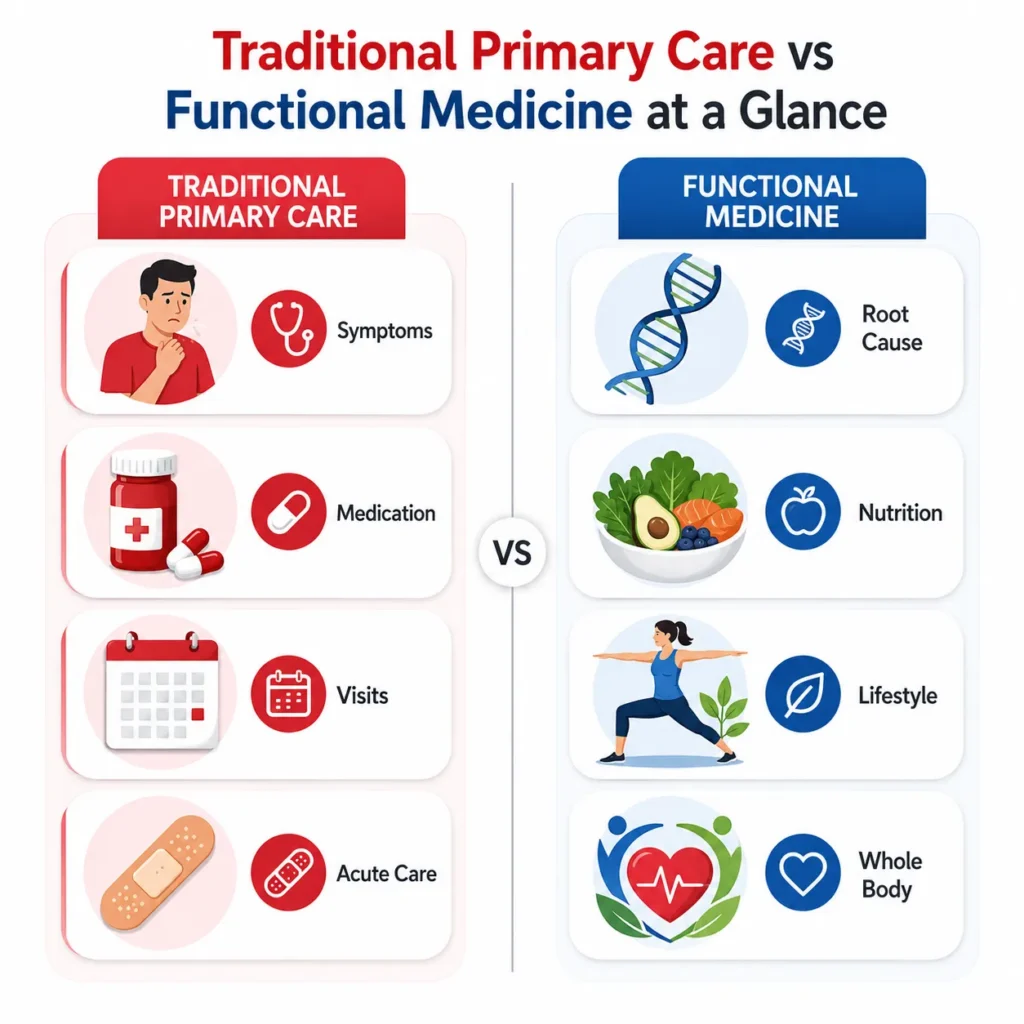
Traditional primary care usually starts with symptoms. You come in with a headache, a cough, or high blood pressure, and your doctor works to diagnose and treat that specific issue. It is efficient, well tested, and backed by decades of clinical research. Most primary care physicians rely on science-based medicine, meaning treatments and medications that have gone through rigorous trials before reaching your prescription pad.
Functional medicine care takes a different starting point. Instead of asking what symptoms brought you today, a functional medicine doctor tends to ask why that symptom showed up in the first place. The goal is finding the root cause rather than just calming down the surface problem. Neither approach is wrong. They just aim at different targets.
What Happens During a Functional Medicine Consultation
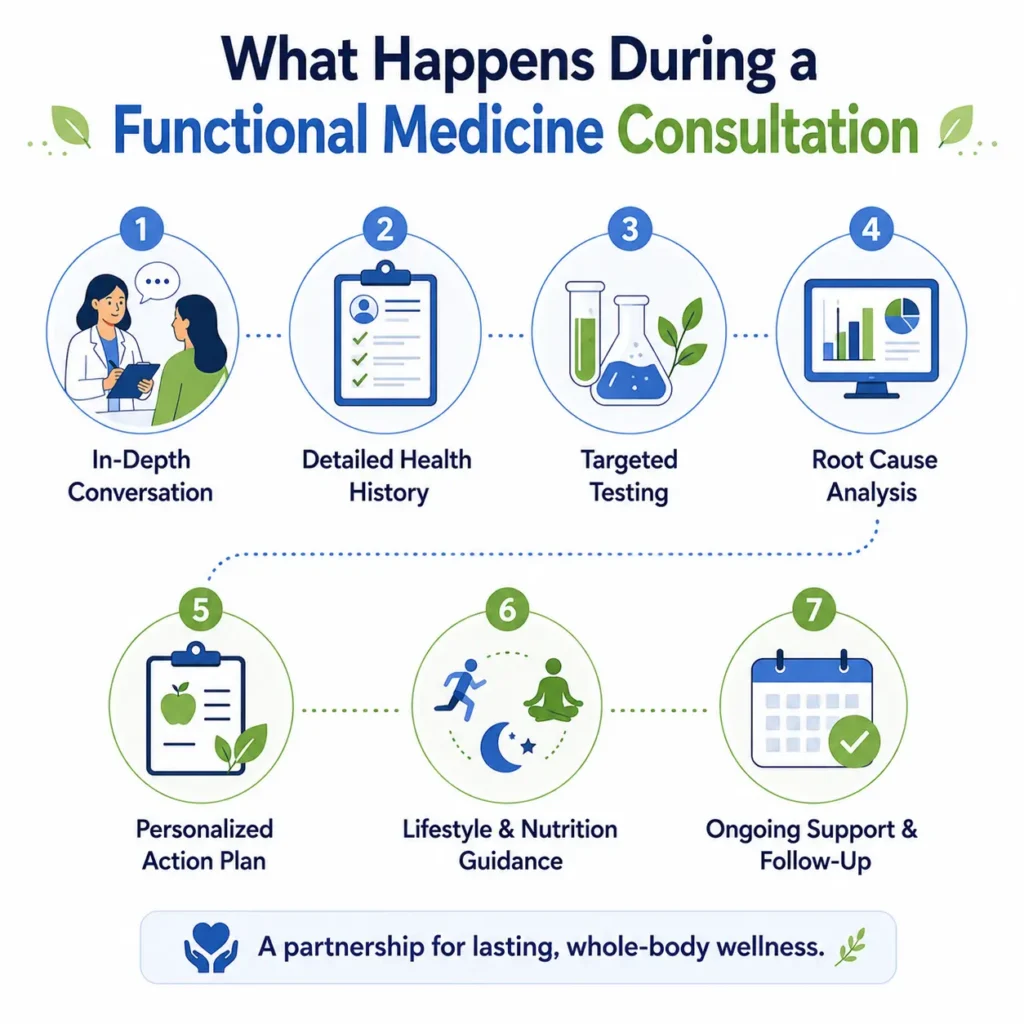
A functional medicine consultation usually looks and feels different from a standard checkup. Instead of a quick fifteen-minute visit, you might spend an hour or more going through your full health history, your diet, your stress levels, your sleep patterns, and even your family background in detail.
This extended time lets the doctor build a much broader picture of what might be driving a chronic issue instead of treating it as an isolated event. For patients dealing with fatigue, digestive problems, or hormonal imbalances that never quite resolve with standard treatment, this deeper conversation often uncovers connections a rushed visit would miss entirely.
How Traditional Primary Care Handles These Same Issues
That said, a good primary care physician is not just handing out prescriptions and moving on. Traditional medicine has come a long way, and many doctors now weave lifestyle advice, preventive screenings, and ongoing monitoring as part of standard care.
The difference usually comes down to time and structure. A traditional visit is built around efficiency, seeing more patients, addressing immediate concerns, and referring out when something falls outside general practice. This system works well for acute issues like infections, injuries, or anything that needs fast, decisive treatment.
Testing Looks Very Different Too
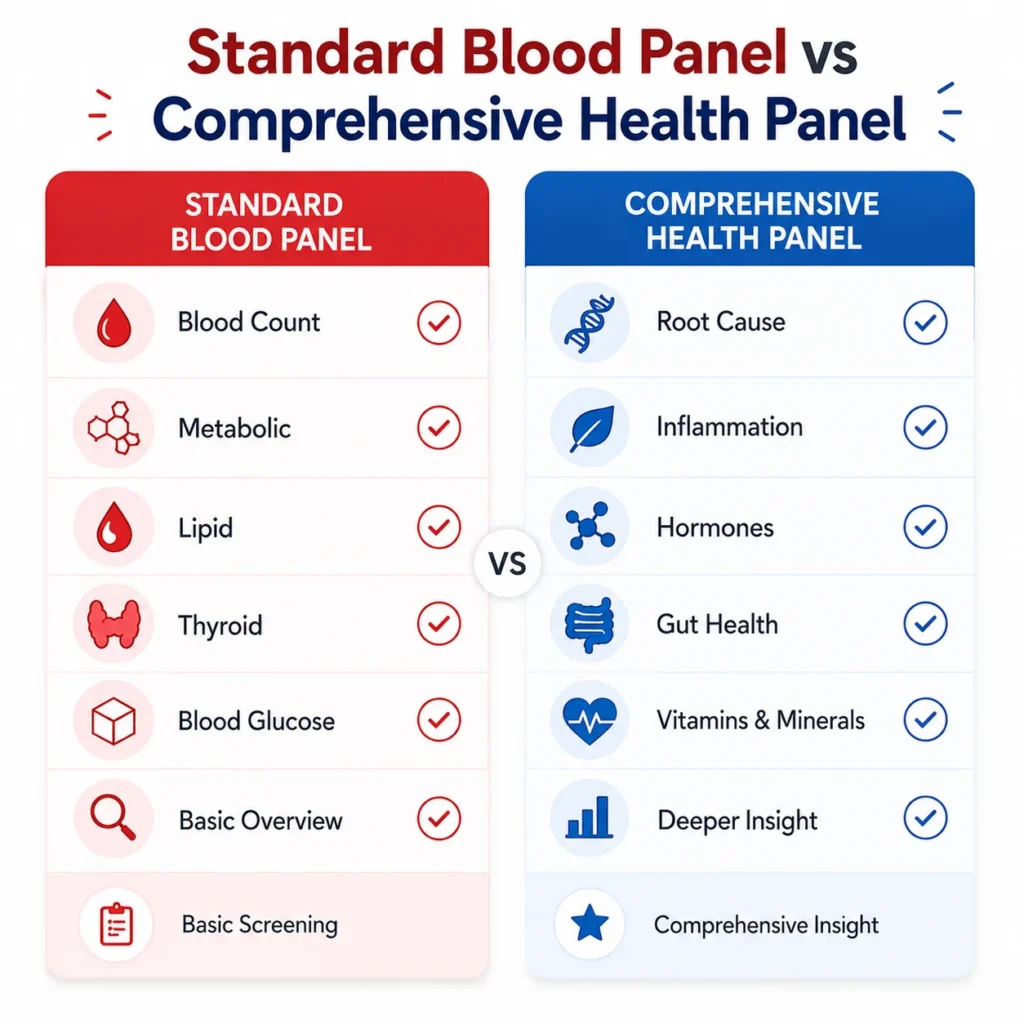
One of the biggest differences between the two approaches shows up in testing. A standard blood panel at a traditional visit typically checks basic markers like cholesterol, blood sugar, and blood counts. It is a solid baseline snapshot, and it catches a lot of common issues early.
Functional medicine testing tends to go further. A comprehensive health panel in this setting might include nutrient deficiency testing, hormone levels, inflammation markers, and gut health indicators that a standard panel does not usually cover. This deeper testing can reveal patterns behind symptoms like chronic fatigue or brain fog that a normal blood test might miss entirely.
That said, more testing is not automatically better for everyone. Someone with a straightforward infection does not need an extensive panel. But someone dealing with an unresolved chronic condition might genuinely benefit from digging deeper.
The Cost Question Nobody Wants to Ignore
Let’s talk about functional medicine cost, because this is often where people hesitate. Extended consultations and expanded testing panels typically cost more upfront than a standard primary care visit. Many patients also ask whether functional medicine is covered by insurance, and the honest answer is that it depends heavily on your specific plan and the services involved.
Some parts of a functional medicine visit, like standard lab work, may be covered in the same way they would be at a traditional practice. Other parts, particularly specialized testing or health coaching services, often fall outside typical insurance coverage and become an out-of-pocket expense.
Traditional primary care visits, on the other hand, are usually well covered by most insurance plans since they fall within standard medical practice guidelines. If cost and insurance coverage are major deciding factors for you, this is worth discussing directly with any provider before committing to a treatment path.
Does Functional Medicine Actually Work
This question comes up constantly, and it deserves a straight answer. Does functional medicine work? For many patients dealing with chronic, complex conditions that have not improved through standard treatment, this approach can uncover contributing factors that were previously overlooked. Addressing nutrient deficiencies, gut imbalances, or hormonal issues sometimes leads to real improvement where traditional treatment alone had stalled.
At the same time, functional medicine is not a replacement for emergency care, acute treatment, or conditions that need immediate pharmaceutical intervention. It works best as a complement to good primary care, not necessarily a full substitute for it. The strongest results tend to come from patients who use both approaches strategically rather than choosing one and abandoning the other entirely.
The Value of Individualized Care Plans
One thing functional medicine care does particularly well is building individualized care plans. Instead of applying the same standard treatment protocol to every patient with a similar diagnosis, a functional medicine doctor tailors recommendations based on your specific test results, lifestyle, and health history.
This kind of personalization can feel like a relief for patients who have cycled through generic treatment plans without much progress. That said, good traditional primary care physicians also personalize care within the limits of their visit structure, adjusting medications, referrals, and follow up based on how you respond over time.
Health Coaching Services and Ongoing Support
Another area where functional medicine often stands out is health coaching services. Many functional medicine clinics pair a doctor’s recommendations with ongoing coaching around diet, stress management, and lifestyle changes. This extra layer of support helps patients actually follow through on complex changes rather than leaving with a printed handout and no real accountability.
Traditional primary care generally does not include this level of ongoing coaching, though some clinics do offer nutrition counseling or refer patients to outside specialists when needed.
The Patient Doctor Relationship Factor
Both approaches depend heavily on the patient’s doctor relationship, but they build it differently. Functional medicine’s longer visits naturally create more space for conversation, which can deepen trust and understanding over time. Traditional primary care, when done well, builds this same trust through consistency and familiarity over years of shorter, more frequent visits.
What matters most is whether you feel heard and understood, regardless of which model you choose. A rushed functional medicine visit can feel just as impersonal as a rushed traditional one, and a thoughtful primary care physician can build just as much trust as a functional medicine doctor with more time on the clock.
When Traditional Primary Care Makes More Sense
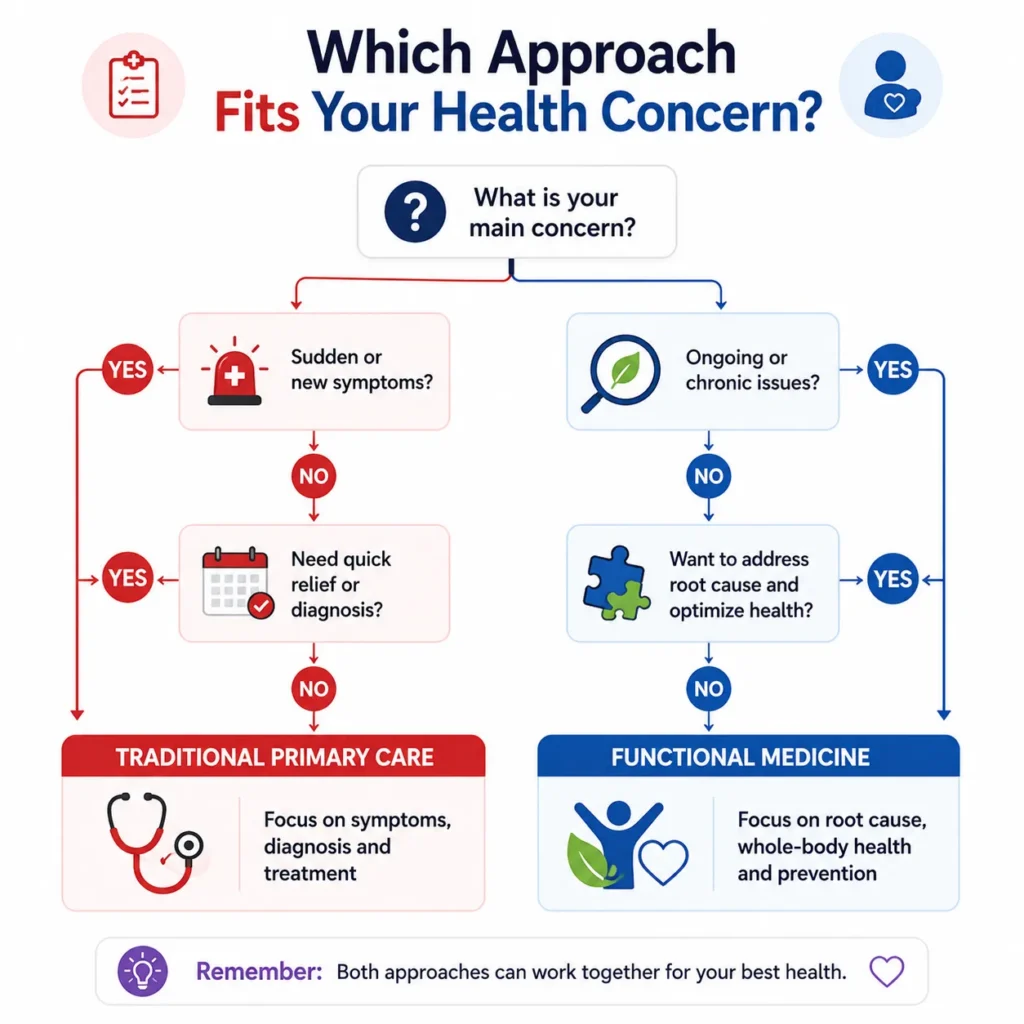
Traditional primary care tends to be the better fit for acute illnesses, infections, injuries, and situations that need fast, well established treatment protocols. It is also generally more affordable and more consistently covered by insurance, making it the practical choice for routine, ongoing healthcare needs.
If you need vaccinations, standard screenings, or treatment for something clearly defined like a strep throat or a broken bone, a traditional visit gets you there faster and usually at a lower cost.
When Functional Medicine Care Might Be Worth Exploring
Functional medicine care tends to make more sense for chronic, unresolved issues where standard treatment has not brought real improvement. Persistent fatigue, unexplained digestive issues, hormonal imbalances, and autoimmune concerns are common reasons patients seek out a functional medicine clinic after feeling stuck with traditional treatment alone.
If you have already been through the standard testing and treatment path without much progress, digging deeper through functional medicine testing might reveal something worth addressing that was previously missed.
Traditional primary care usually treats specific symptoms using established, science-based protocols. Functional medicine care focuses on finding the root cause behind chronic symptoms through deeper testing and longer consultations.
It depends on your plan. Standard lab work may be covered, but specialized testing and health coaching services are often out of pocket expenses.
Many patients with unresolved chronic issues see real improvement once nutrient deficiencies, gut imbalances, or hormonal issues are identified and addressed.
Not necessarily. Many patients benefit from using a primary care physician for routine care and functional medicine care for deeper, unresolved chronic issues.
Expect a longer visit covering your full health history, lifestyle, diet, and a comprehensive health panel beyond a standard blood panel.
Finding the Right Balance for You
The honest answer to functional medicine versus traditional primary care is that this does not have to be an either-or decision. Many patients benefit most from using a primary care physician for routine care, prevention, and acute issues, while turning to functional medicine care when a chronic problem needs a deeper investigation.
The right choice really depends on your specific health concerns, your budget, and how much time you are able to invest in extended visits and testing. Talking openly with a provider like Peoples Med Care about your goals, your history, and your concerns about cost will help you figure out which approach, or which combination of both, actually fits your situation best.